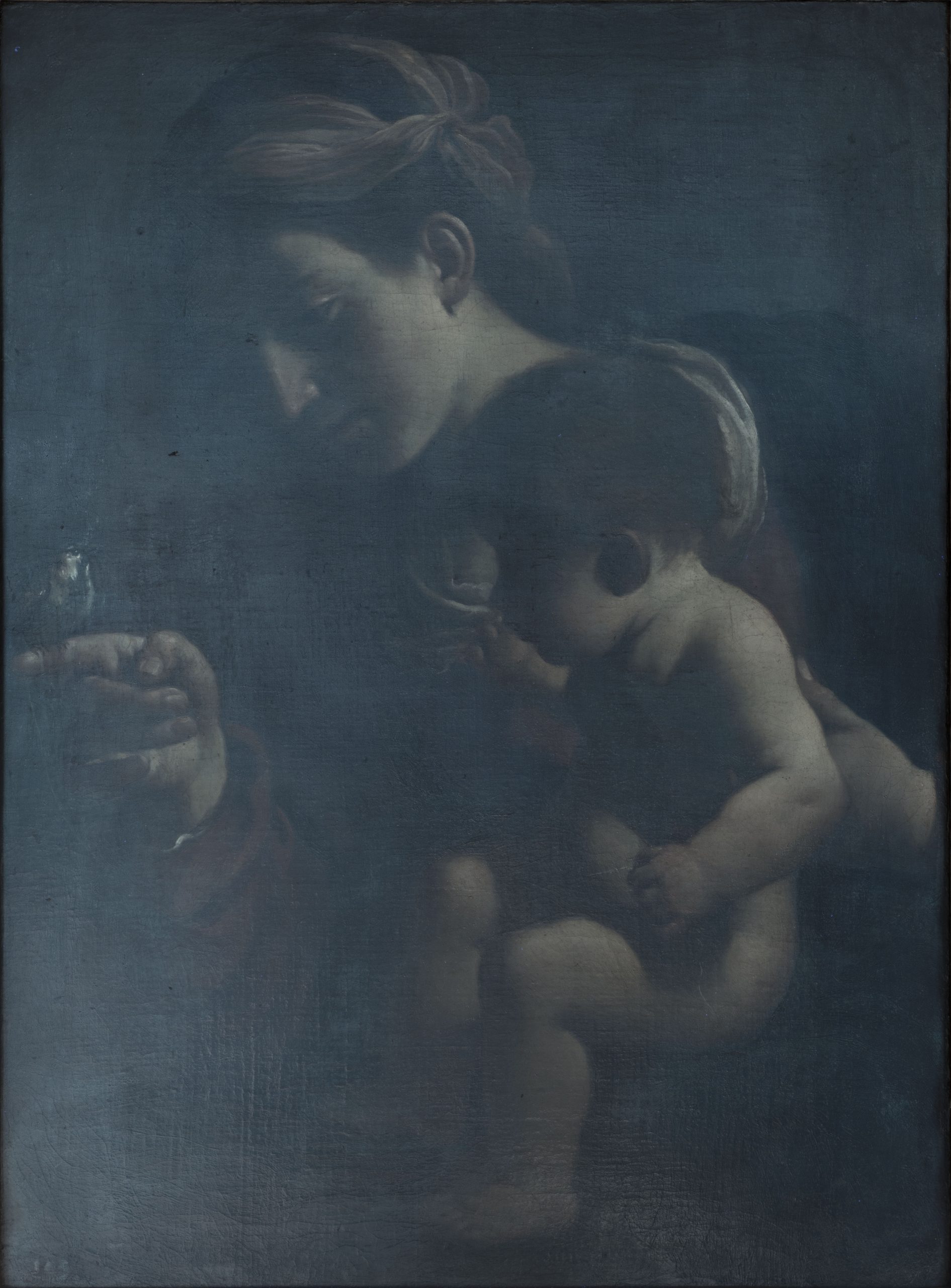
Grazing light photography involves positioning the light source so that it projects the light beam almost parallel to the surface of the painting. This procedure highlights all the reliefs and depressions on the pictorial layer. Such a method also detects the presence of engravings or overlaps of colour, shedding light on the artist’s painting technique. When it comes to monitoring conservation status, this type of lighting makes accretions, bulges and gaps easier to notice.
The electromagnetic radiation that our eye can detect falls within a range of wavelengths, (“visible light”), from about 400 to 750 nanometers. Beyond these limits, the radiation becomes invisible to humans, but it still can interact in various ways with matter, e.g., through absorption, reflection, transmission, similar to what happens with visible light.
The photographic technique of ultraviolet radiation-induced visible fluorescence (UVF) exploits the behavior that some materials have when illuminated by a light source emitting ultraviolet radiation not visible to the human eye: ultraviolet light is absorbed into the surface and visible light is re-emitted. The different brightnesses, or fluorescences, observable on an irradiated painting depend not only on the chemical composition of the substances in the coating varnish and pictorial layers, but also vary over time. This is the reason why fluorescence photography is effective in distinguishing repainting from original drafting: more recent and overlapping materials tend to appear darker due to the different color and intensity of fluorescence they show, so parts that have undergone recent restorations or additions will appear darker or totally black.