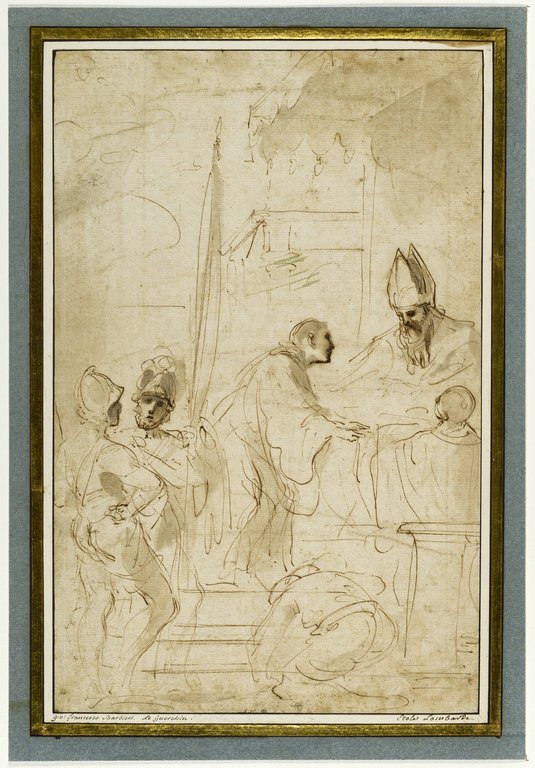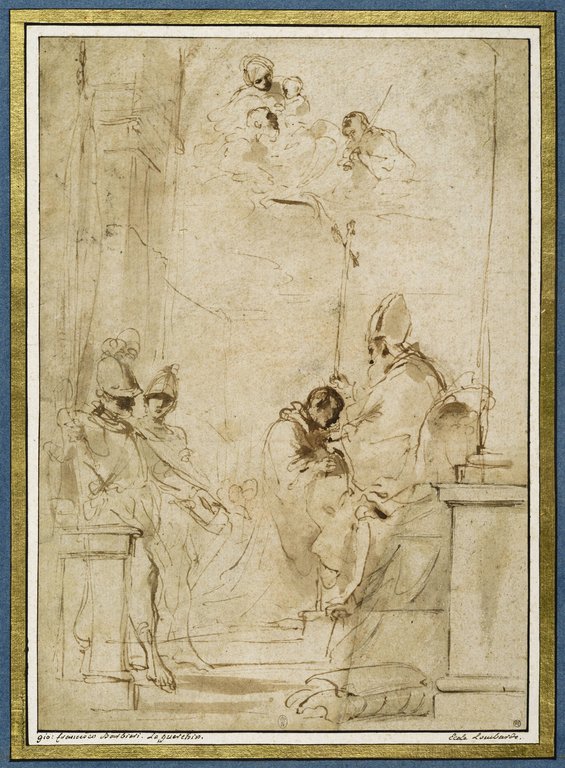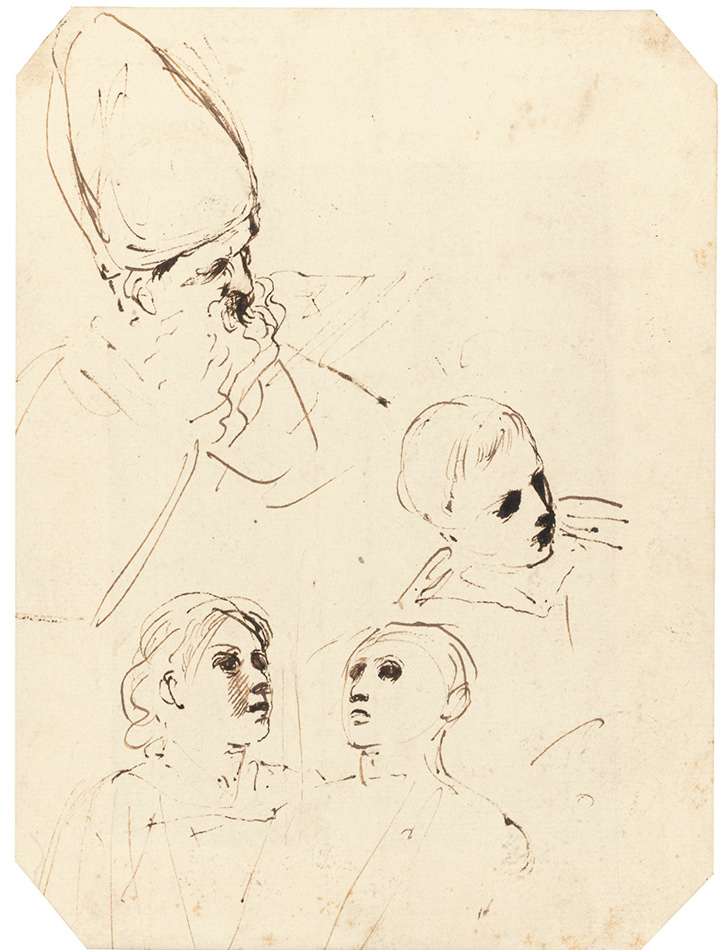



In this context, the drawing represents any figure drawn using graphic lines, engravings or appositions on a support. Since it can be realized with simple means, it allows the artist to develop a personal technique and offers ample space for experimentation, becoming the most direct and sincere expression of his thought. Depending on the level of detail and complexity, the drawing was described in various ways in the artistic treatment (sketch, sketch, model, sketch).
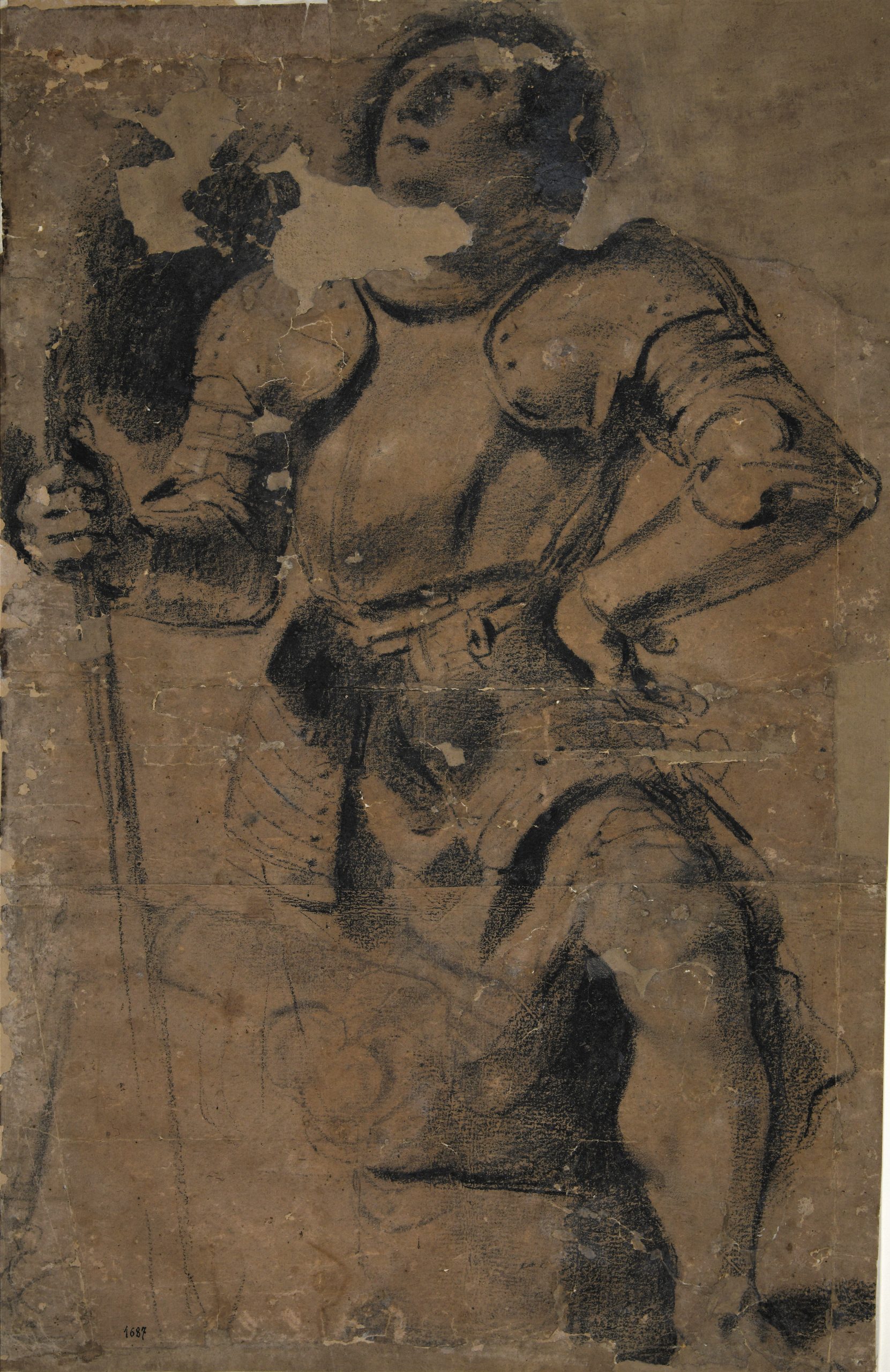
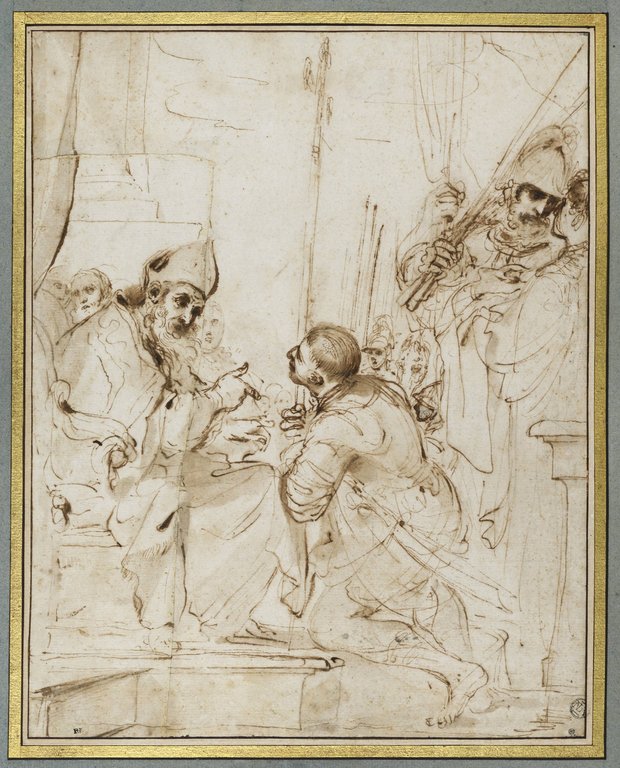
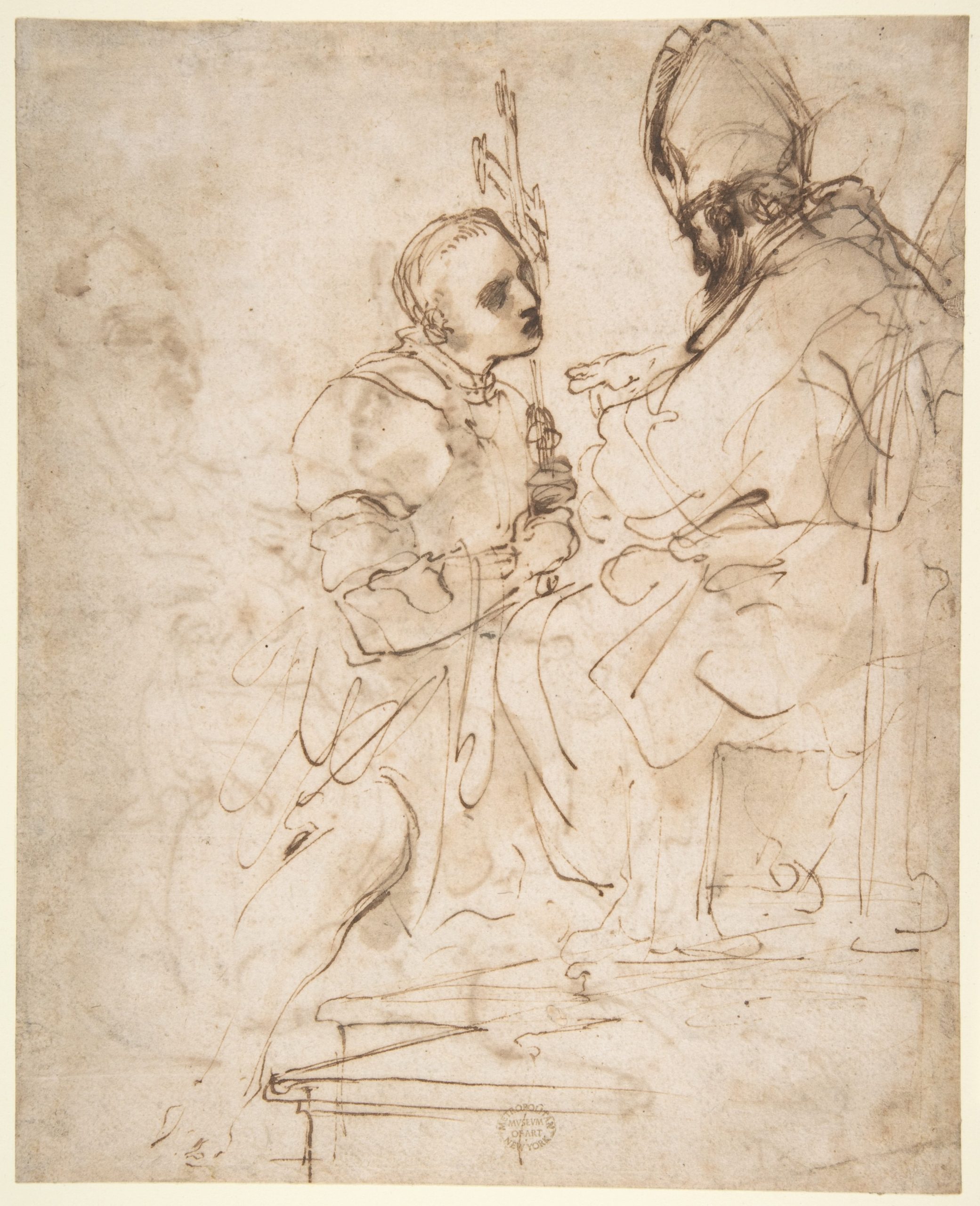
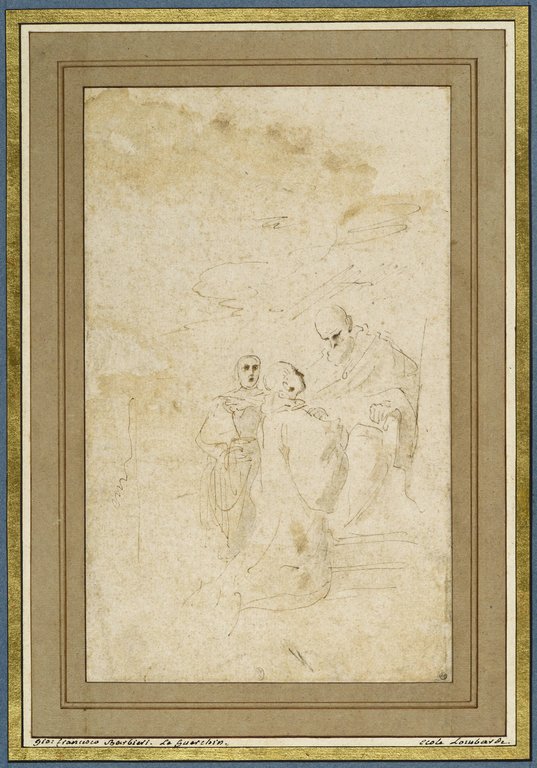
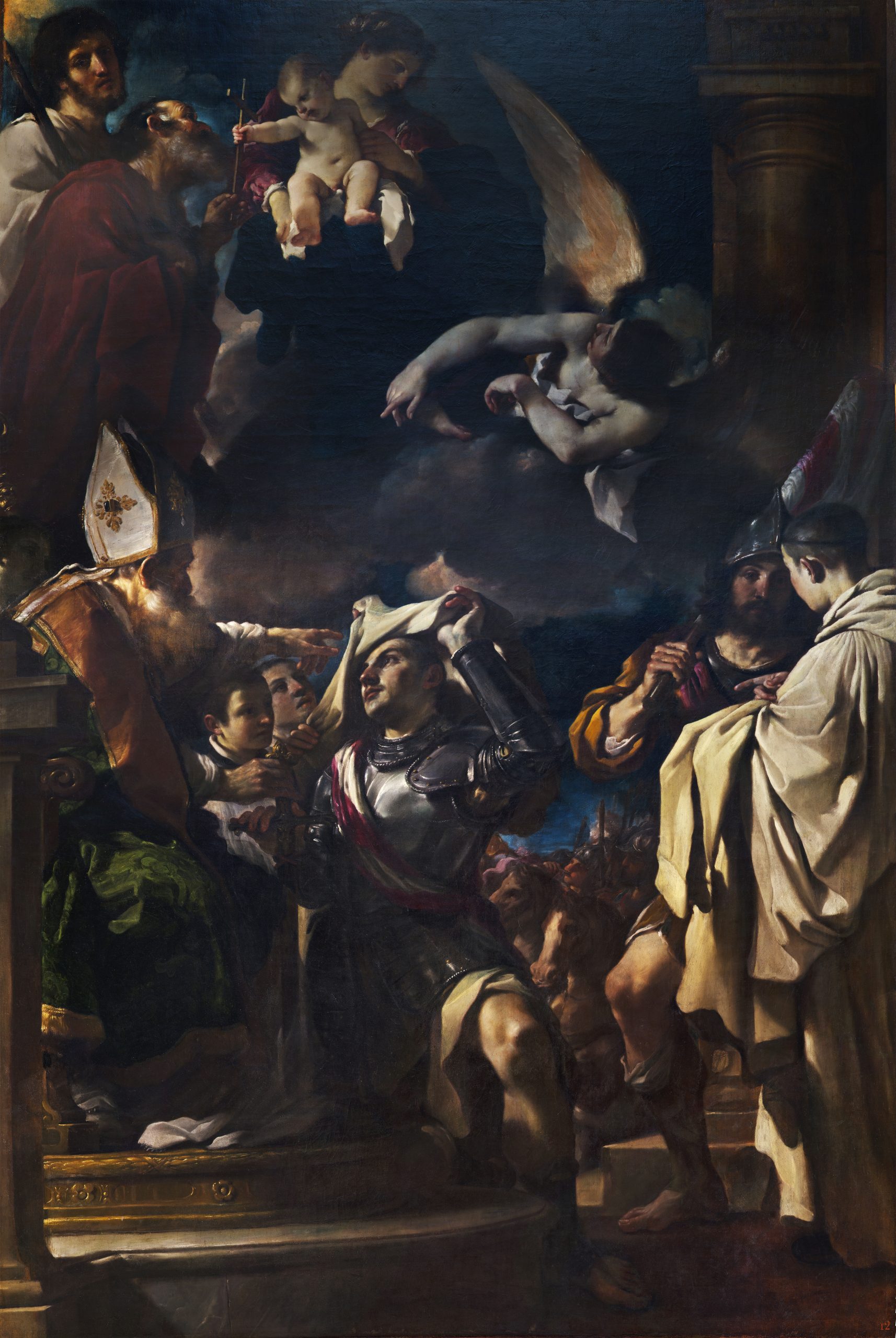
The design of the Vestizione di San Guglielmo was particularly accurate and can be reconstructed through twenty-six preparatory drawings, scattered in Italian and foreign collections, showing studies for the whole or for the main figures. The Guercino carefully investigated the position of the left arm of the saint: at first the hand was resting on the side, a position that was modified in the final drawing of the painting when the arm was raised above the head to receive the religious dress.

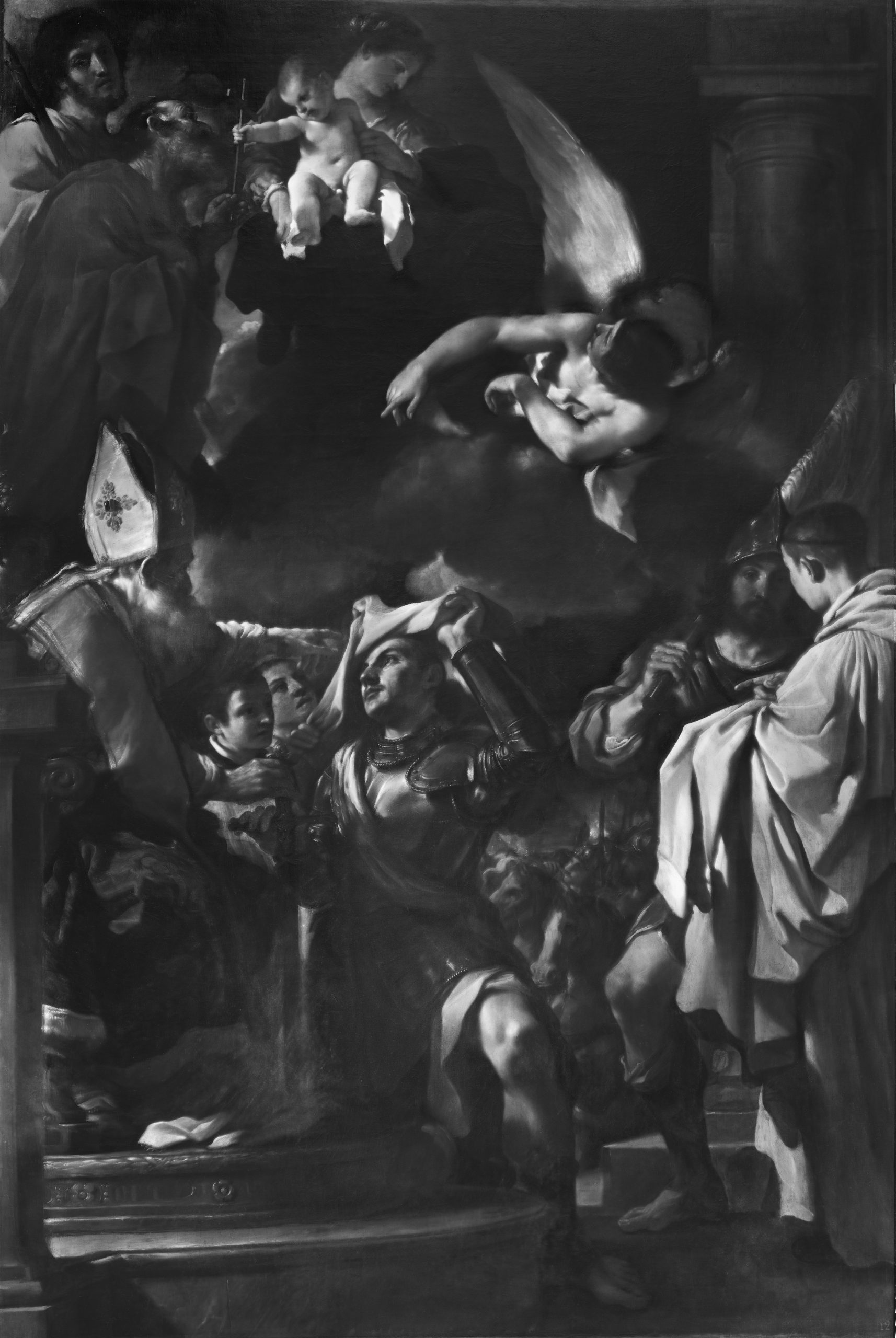
Look for corrections, afterthoughts and regrets in the main IR image on your left.
The modus operandi of Barbieri is mainly based on a direct drafting of color, almost abandoning the technique of preparatory drawing, limiting itself to short strokes, thin, not continuous and half dry for the realization of the contours of the face of some of the characters.
A fluid medium brush is, instead, used by Guercino in some steps, to create an artifice aimed at «detaching from the bottom» certain elements, in order to bring them into the foreground, in a sort of three-dimensional treatment. This is the case, for example, of the right bishop’s knee and legs and the angel’s left arm.
In order to obtain a correct geometric setting of the architectural elements, Guercino draws continuous lines in half dry and without uncertainties that testify to the use of line and/or team, visible in the architecture in the background.
A real design change is instead attested for the arm of the Saint, whose position is varied. Originally the saint’s left arm was facing down with his hand resting on his side.
The electromagnetic radiation that our eye can detect falls within a range of wavelengths, (“visible light”), from about 400 to 750 nanometers. Beyond these limits, the radiation becomes invisible to humans, but it still can interact in various ways with matter, e.g., through absorption, reflection, transmission, similar to what happens with visible light.
Infrared reflectography is an image acquisition technique that exploits the ability of infrared radiation (wavelength of near-infrared radiation 800-1000 nanometres) to penetrate below the surface of paint and visualize compositional paint changes. By taking advantage of this property, it is possible to observe – where present- preparatory sketches underneath the pictorial layer or to reveal pentimentos (afterthoughts, regrets) or to study changes made by the artist. The images that can be obtained are greyscale, where the lightest areas are those with chemical-physical characteristics that reflect infrared radiation either to a larger extent or completely. The sensitivity of the analysis depends not only on the chemical nature of the paint layers but also on their thickness. Infrared reflectography is pivotal in order to study the painter’s technique and the ‘idea’ at the origin of the painting: it is possible to observe elements that are not visible to the naked eye and to provide information on the evolution of the composition and construction methods of the artwork.