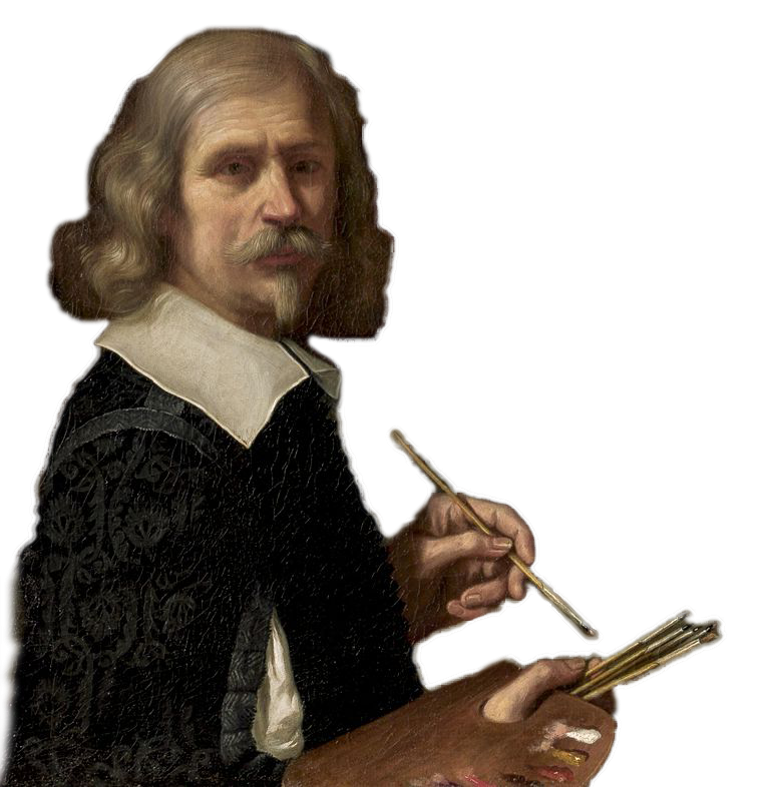




Published in 1678 by Carlo Cesare Malvasia in his Felsina Pittrice, a collection of biographies of Bolognese painters, il Ristretto de’ Successi is a celebratory memoir of Guercino’s career, compiled with the contribution of his nephews and heirs, Benedetto and Cesare Gennari, who delivered the testimony to the historiographer so that he could use it as the core of his biography of the artist.
Thanks to sporadic meetings with the Centese painter, Malvasia was able to amplify the news in the Ristretto with valuable anecdotes and circumstantial information, interpolated to the text provided to him by the Gennaris.
If in the Book of Accounts, the real accounting ledger of the Barbieri firm, first Paolo Antonio and then Guercino and Benedetto II accurately noted the workshop’s orders and earnings, in the Ristretto de’ Successi the nephews listed their uncle’s major artistic enterprises, taking care not to report their uncle’s lavish fees.

Malvasia 1678, II, p. 363
«He painted a fresco of St. Roch in Bologna in the Company of the said Saint, that was done in half a day».
The engraver Gaetano Canuti, active in the first half of the nineteenth century, made graphic reproductions of the paintings in the oratory in 1831. He engaged in their popularization with the aim of promoting knowledge of the works of the “valentissimi pittori” (“most talented painters” ) who painted the decorative cycle. The engravings proved to be very useful in the study of attributions and also as evidence of their formal and conservation state in the first half of the 19th century.