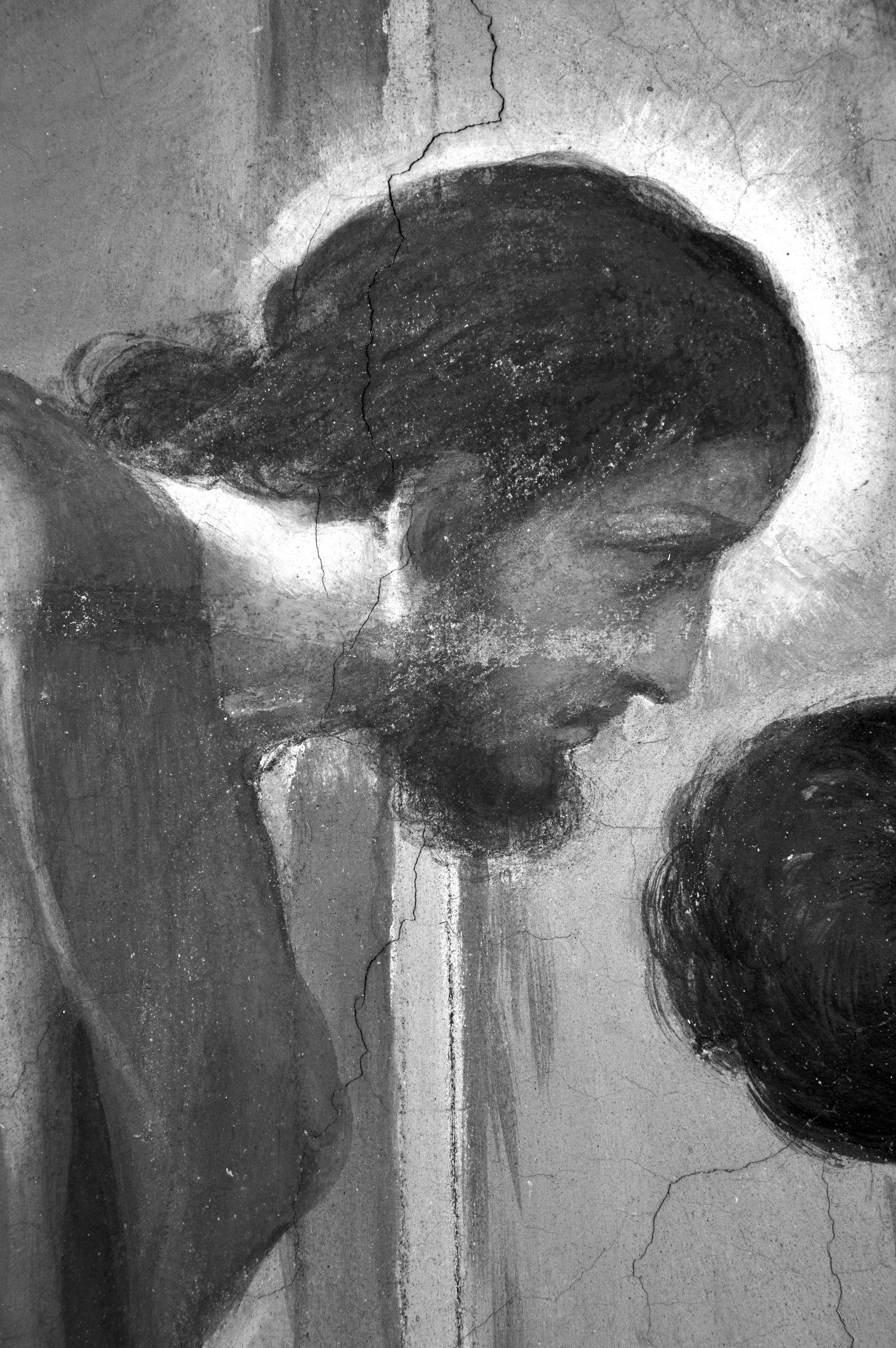
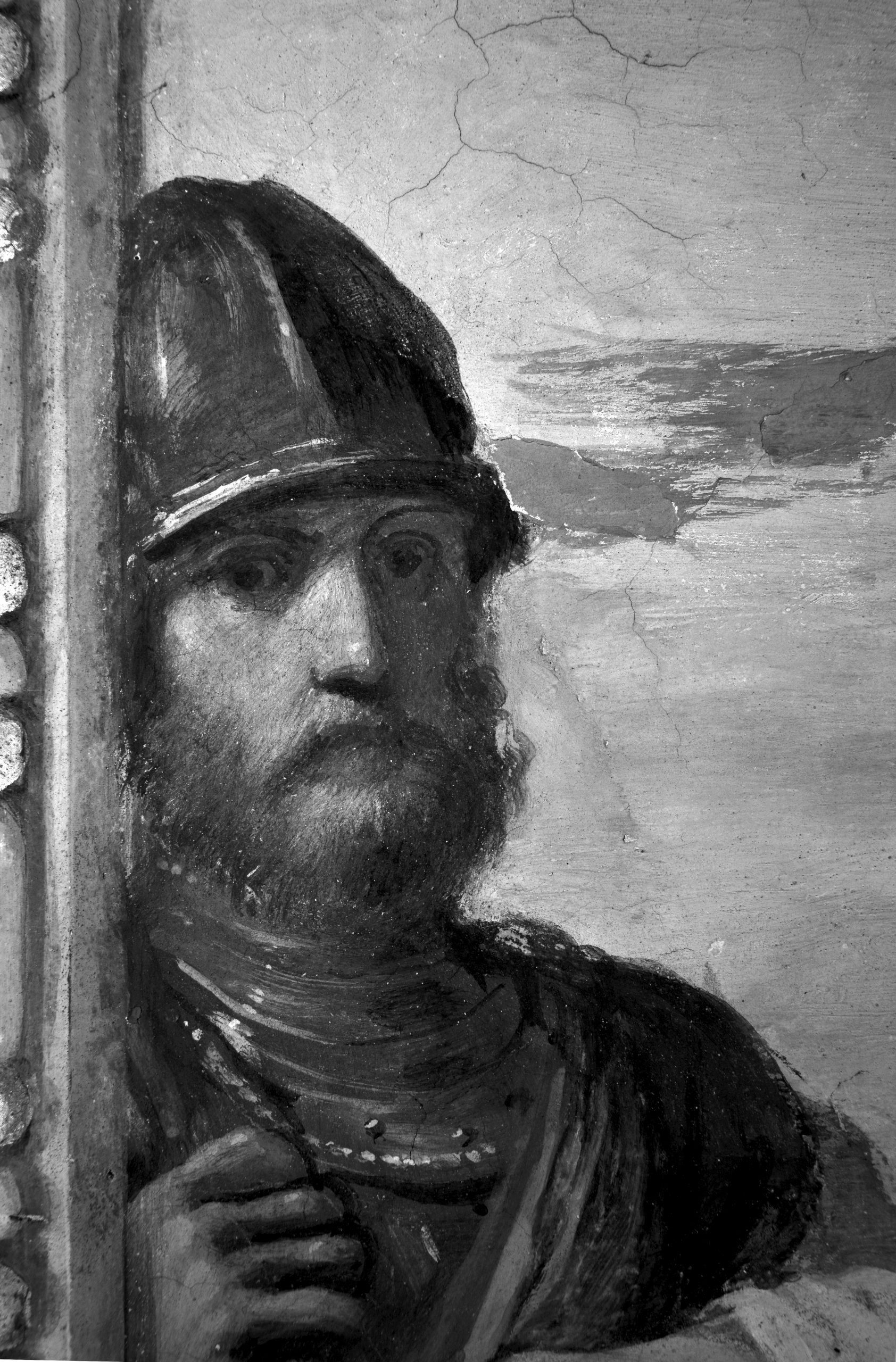
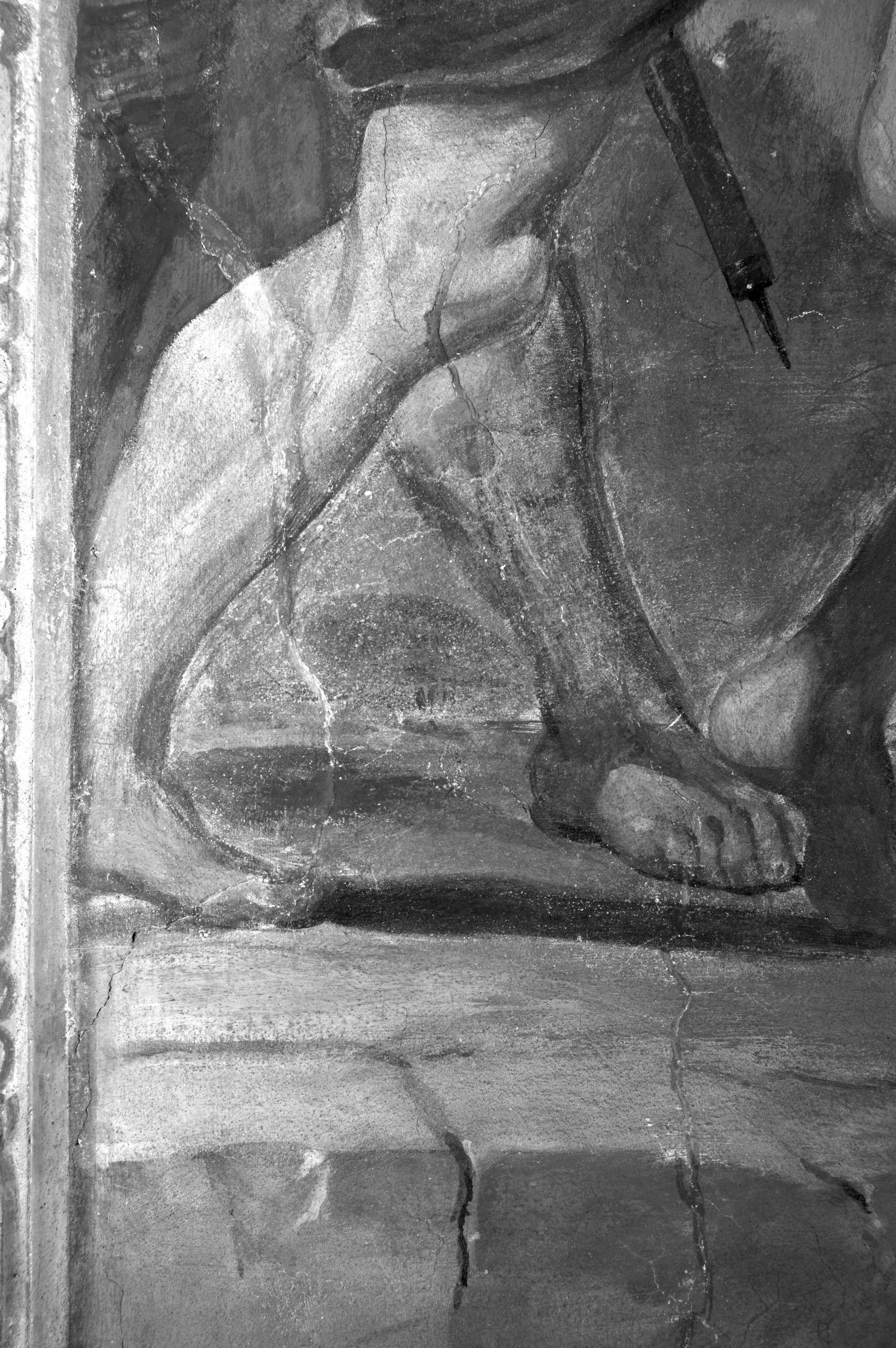
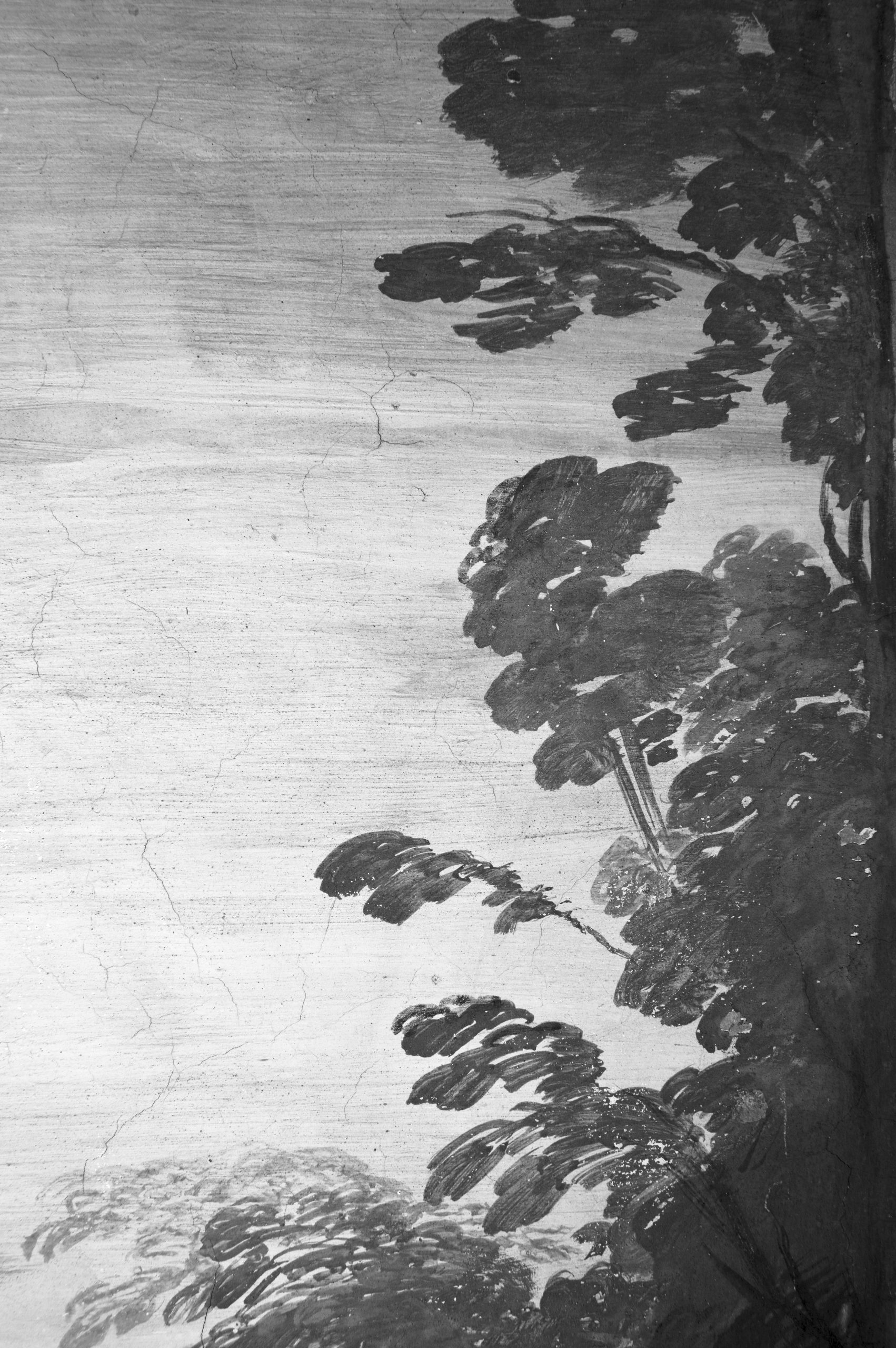
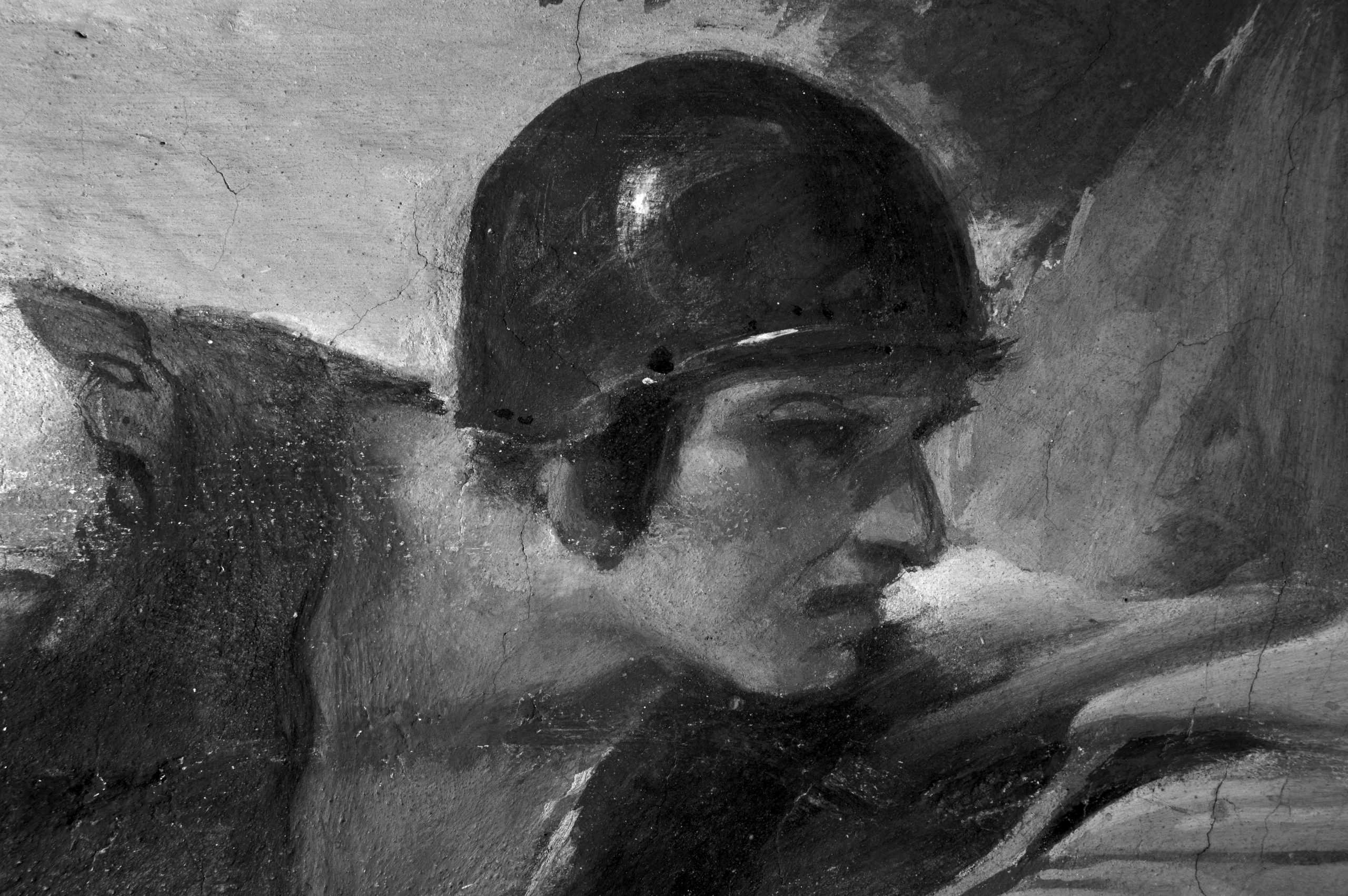
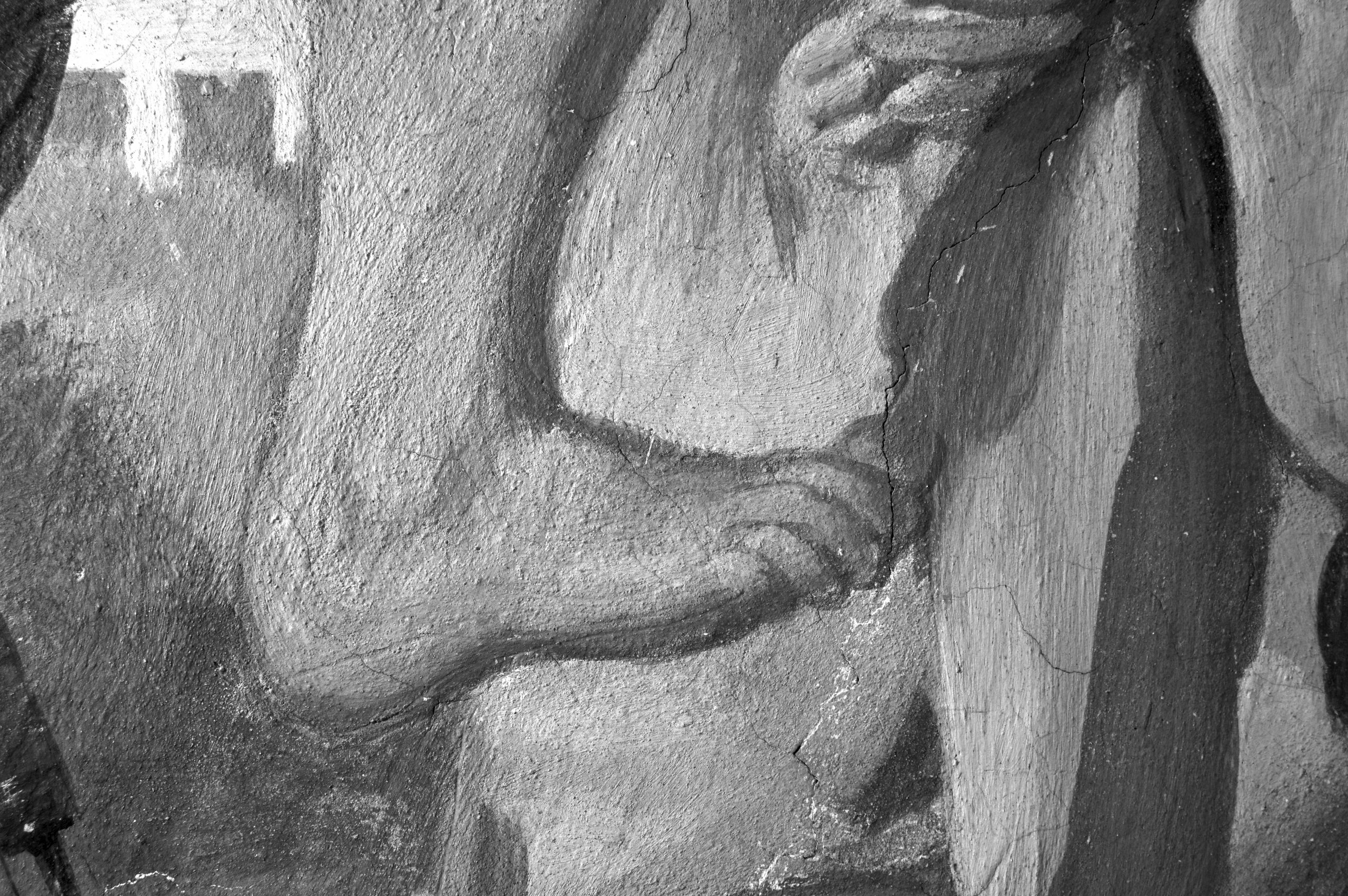
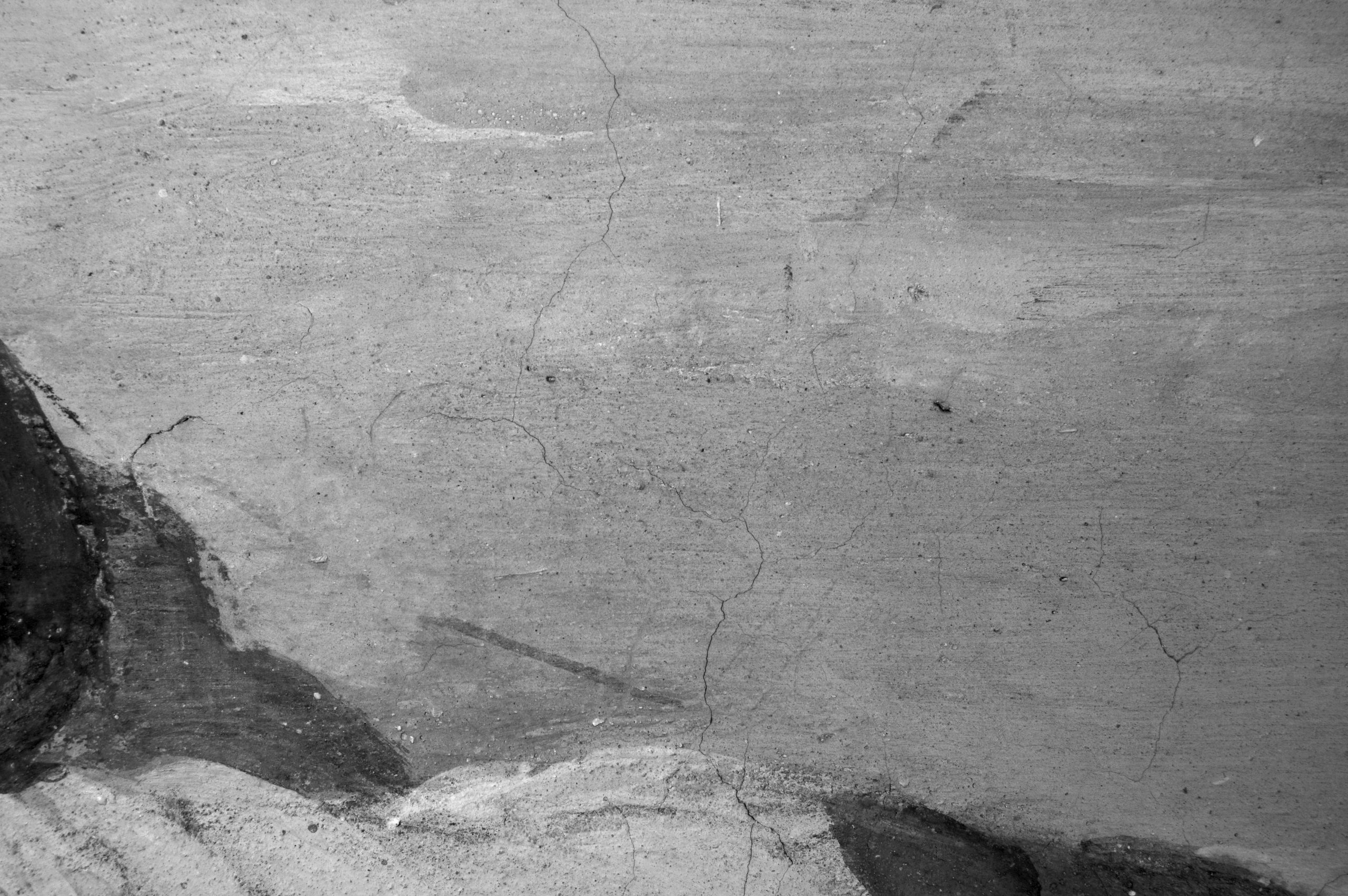
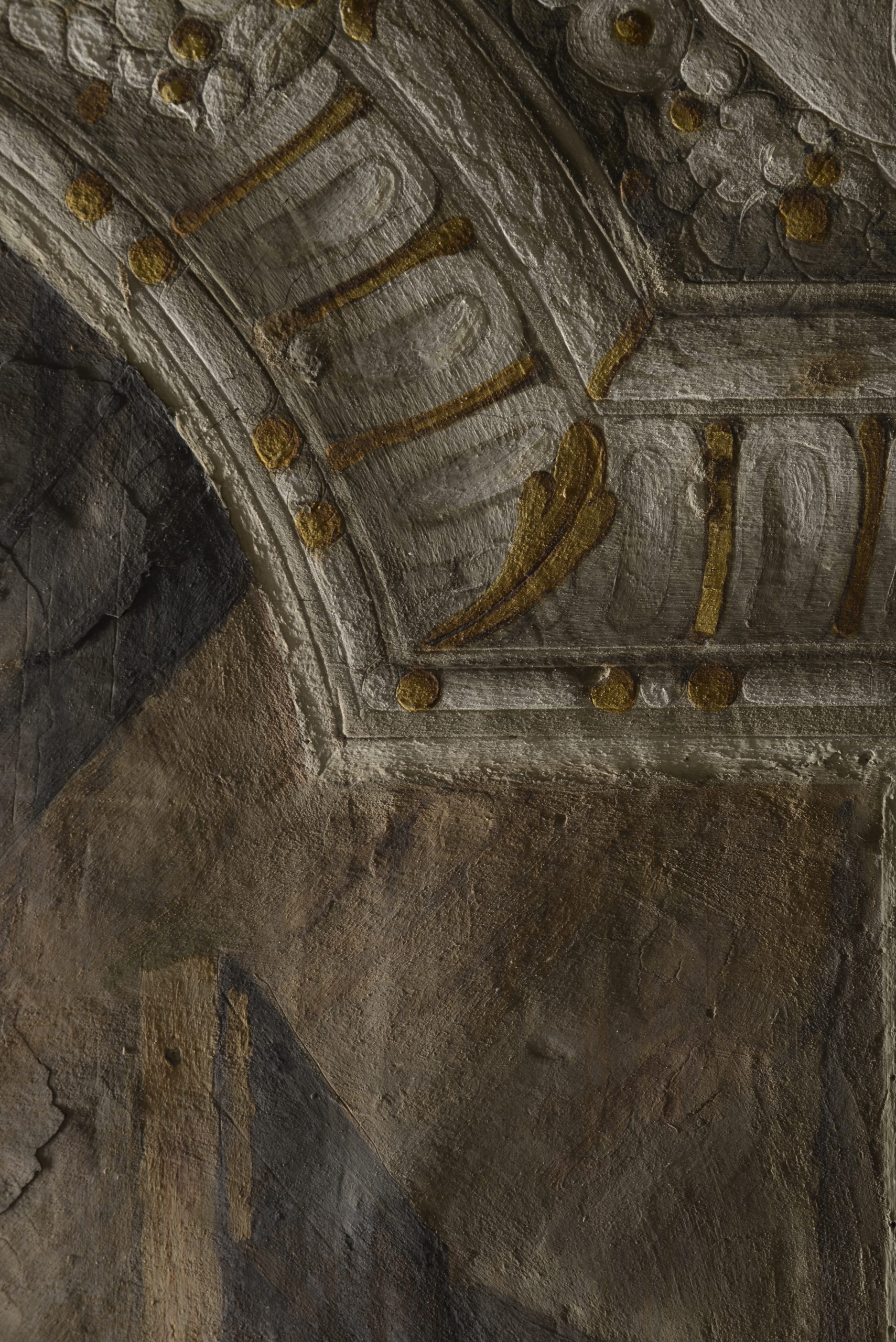
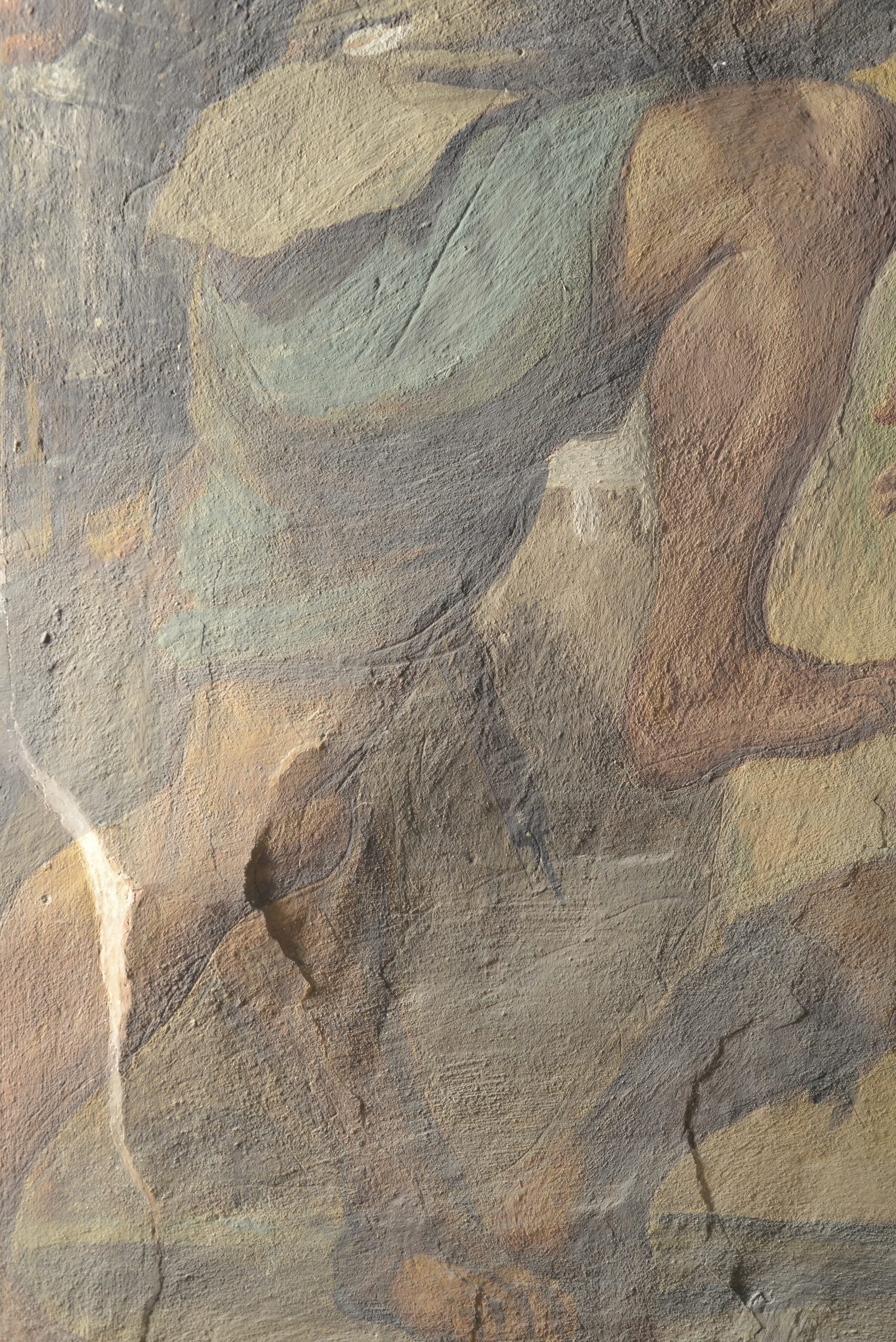
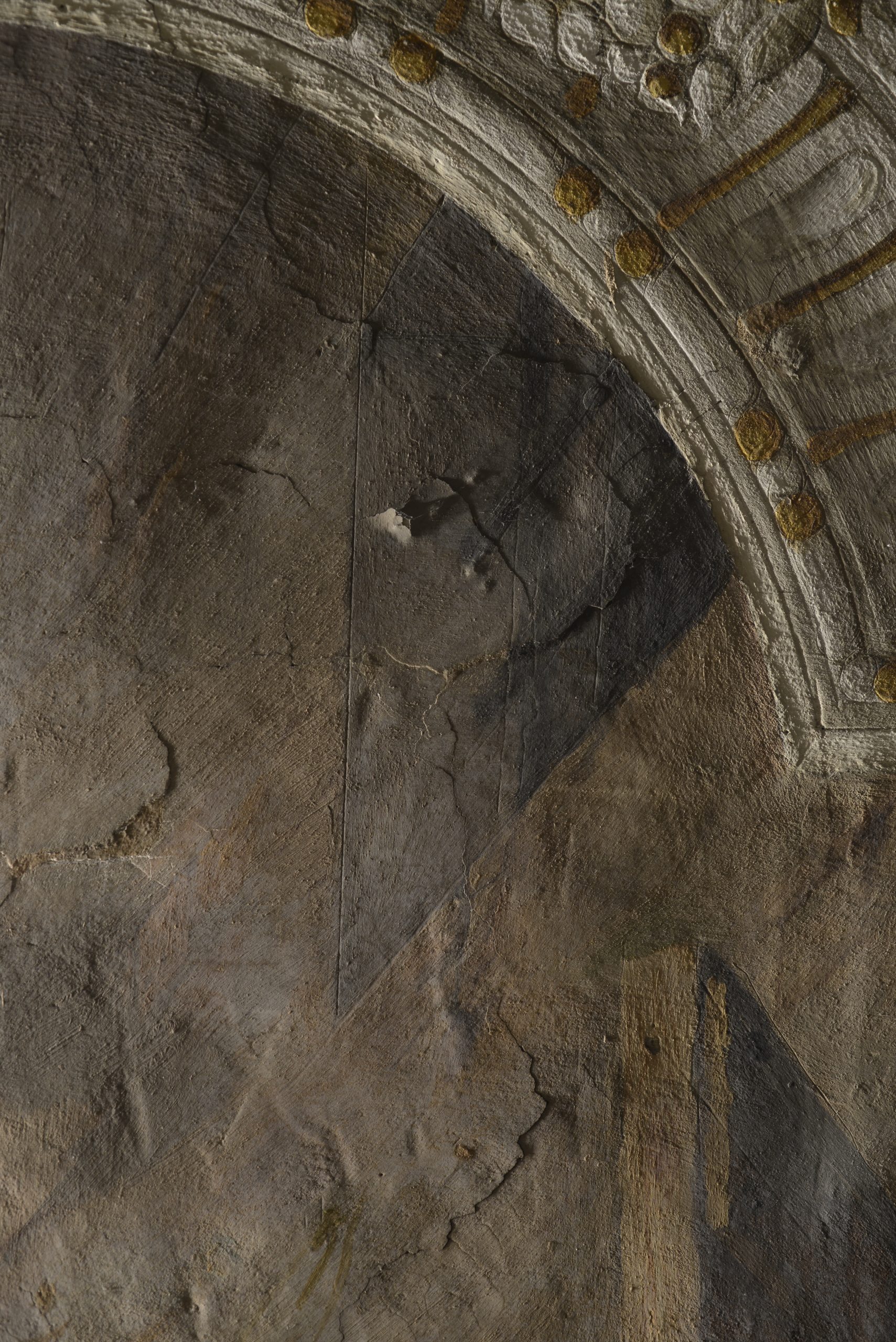
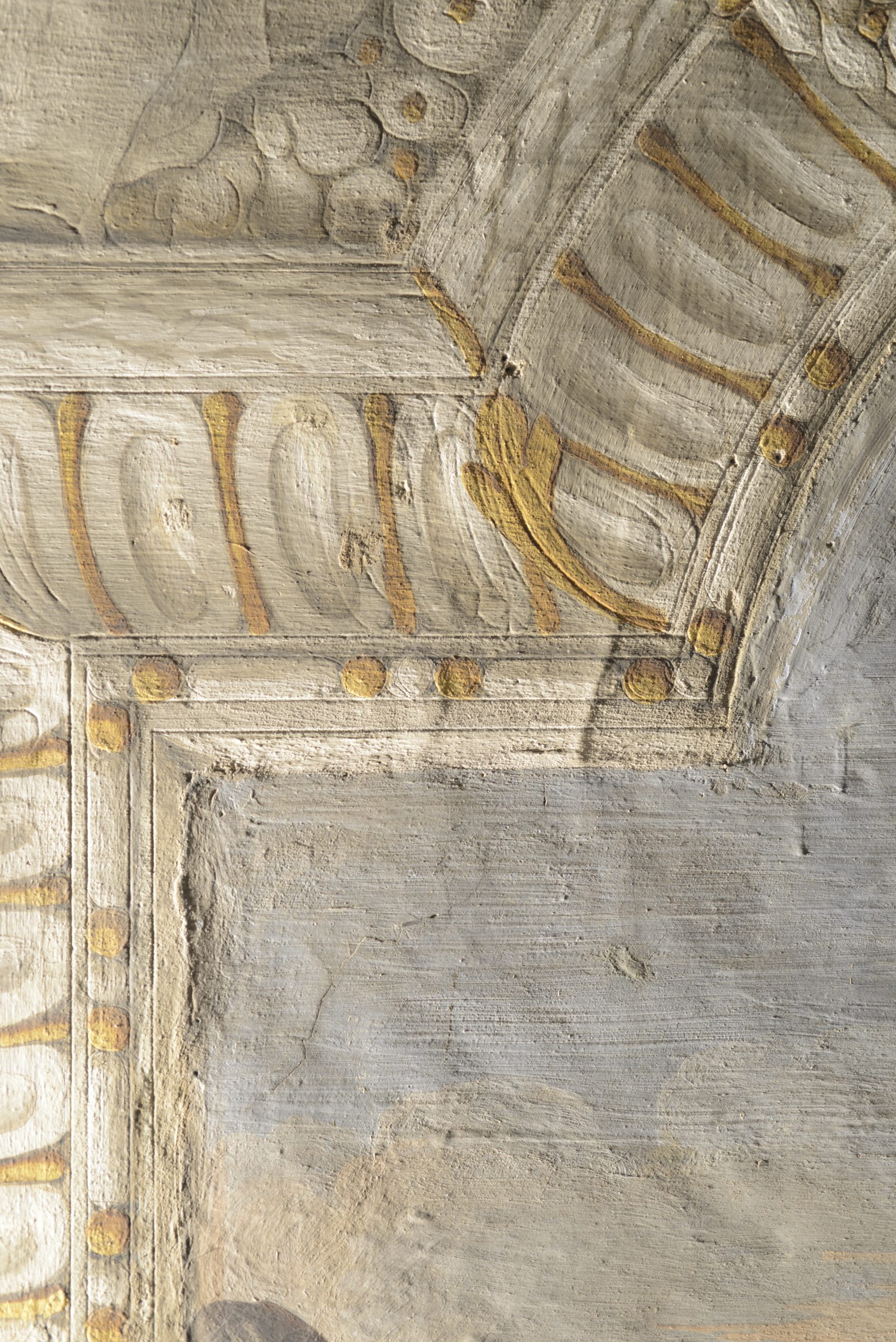
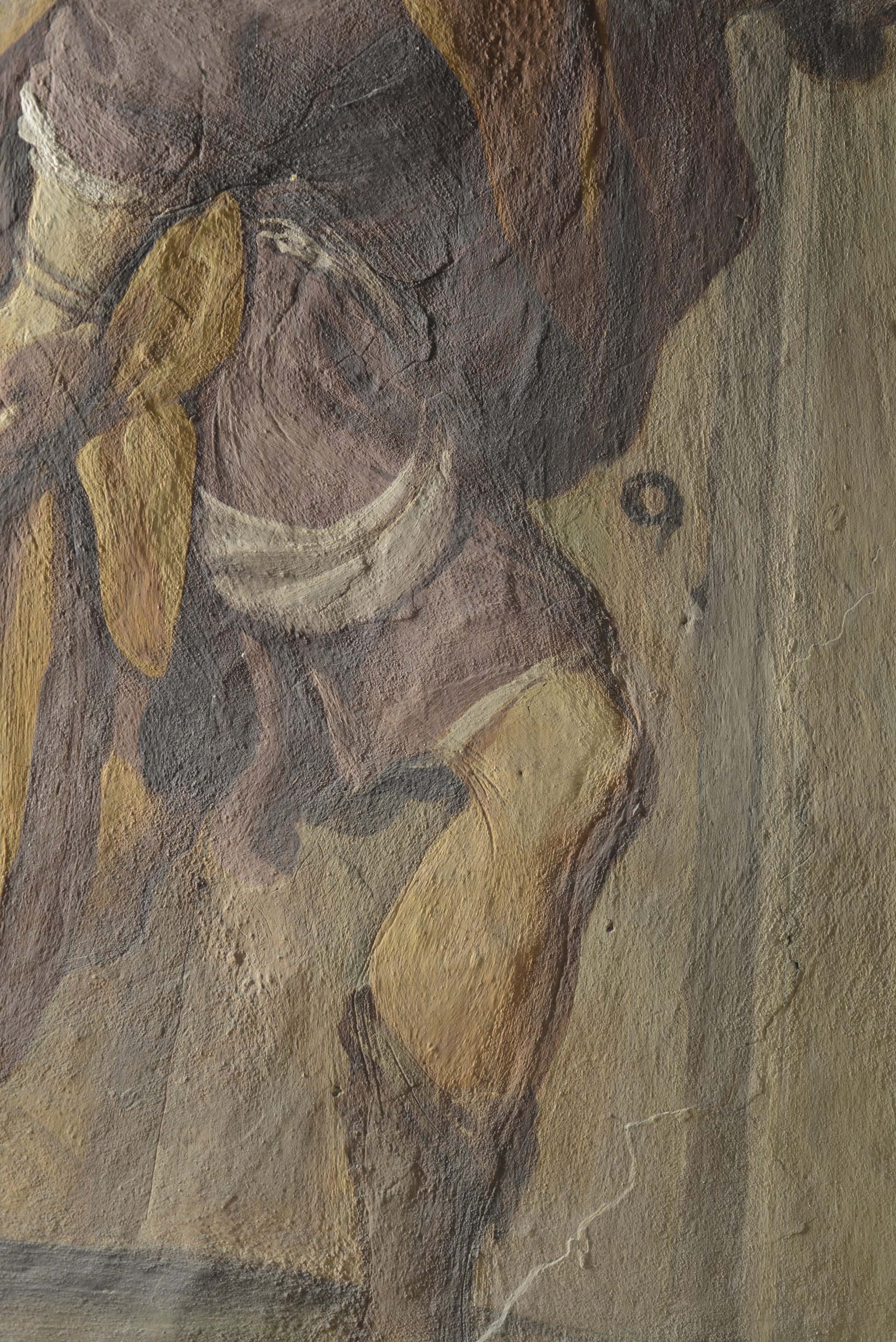
Guercino’s modus operandi as a wall decorator is investigated through multispectral diagnostic techniques such as grazing light photography and Infrared Reflectography (IR). Observation in grazing light makes it possible to observe how the painter graphically sets up the work by means of direct engravings in sketch mode conducted with fast, confident, medium-short strokes. Often, reconsiderations and corrections are made in the same moment or immediately after. Regarding the architecture, engravings are predominantly employed in the upper part of the composition, sometimes with the aid of a ruler, while a graphic trace is preferred in the lower part. Such designs are often not slavishly followed during the painting phase. The study of images in grazing light also allows the identification on the pictorial surface of overlapping layers of plasterwork probably associated with the so-called “giornate” (“days”).
As far as the infrared investigations are concerned, it still emerges how in the graphic phase, some figurative elements are sketched with rapid, confident strokes using a dry medium with fine-point: this is particularly evident in the anatomical features of St. Roch and the soldier leading him to prison, as well as in the main outlines of the elements. These strokes are then taken up in the pictorial phase through the use of a black-brown stroke applied with a brush. Secondary elements such as trees or brief glimpses of landscape, as well as some figurative components are painted directly with a brush.