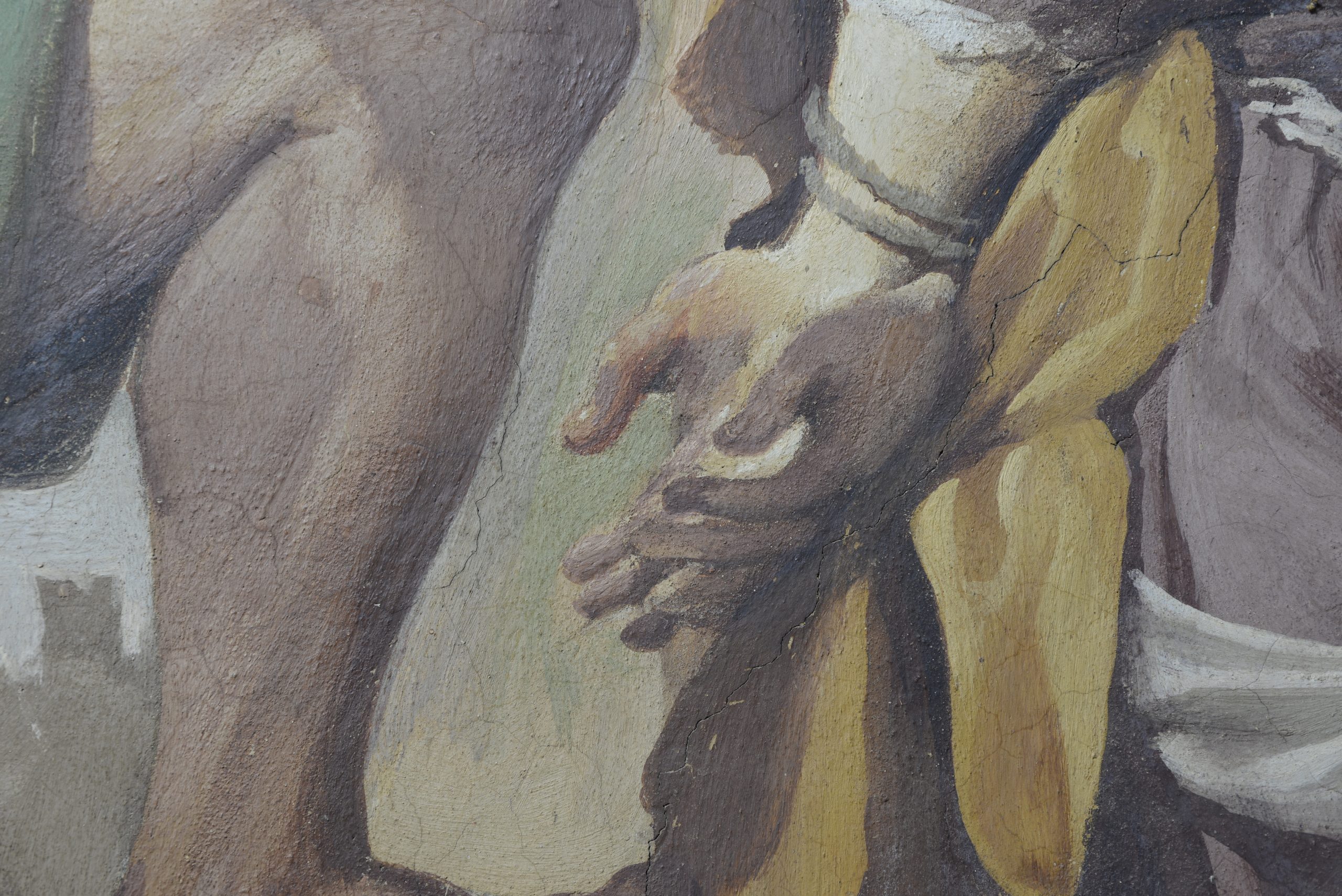
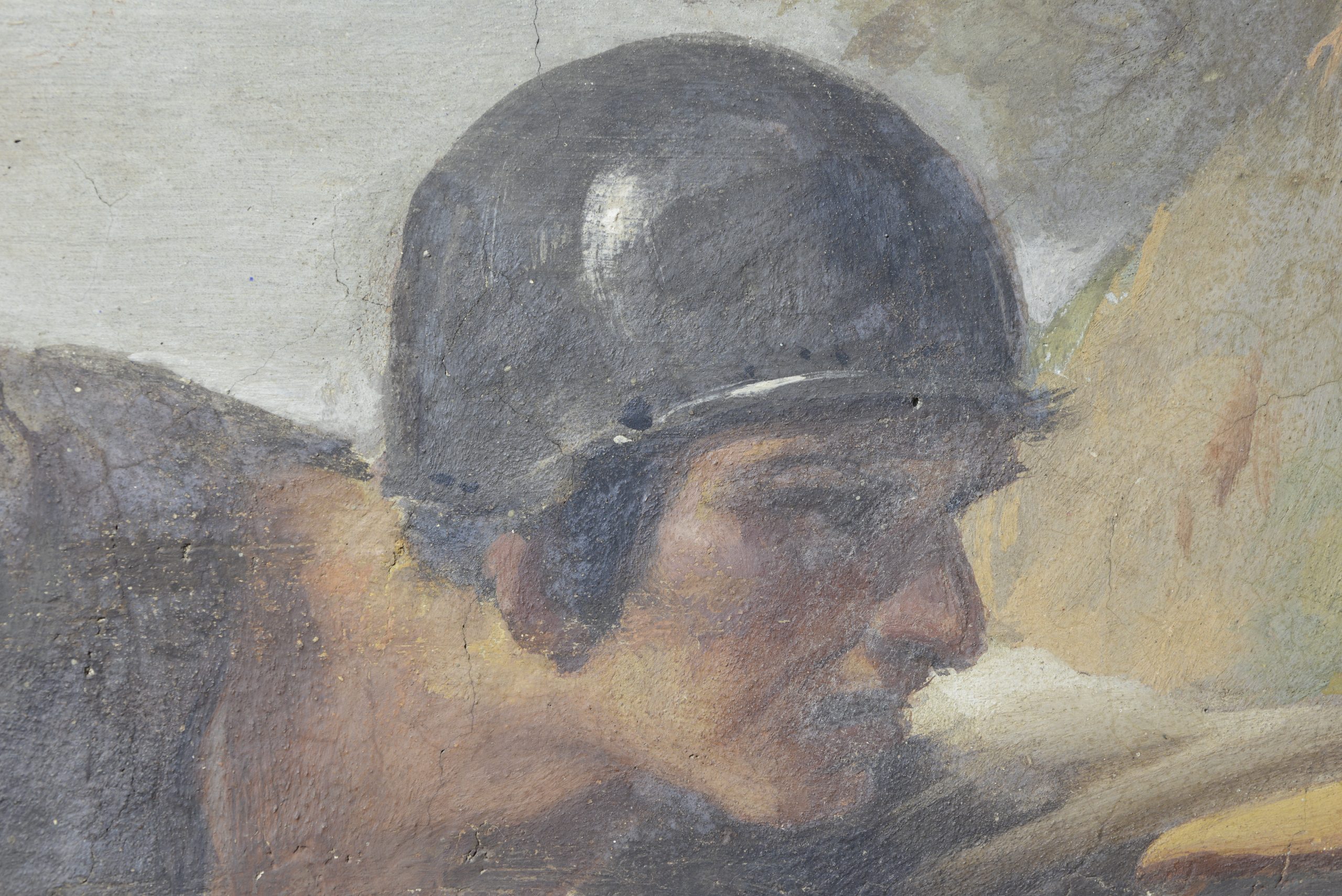
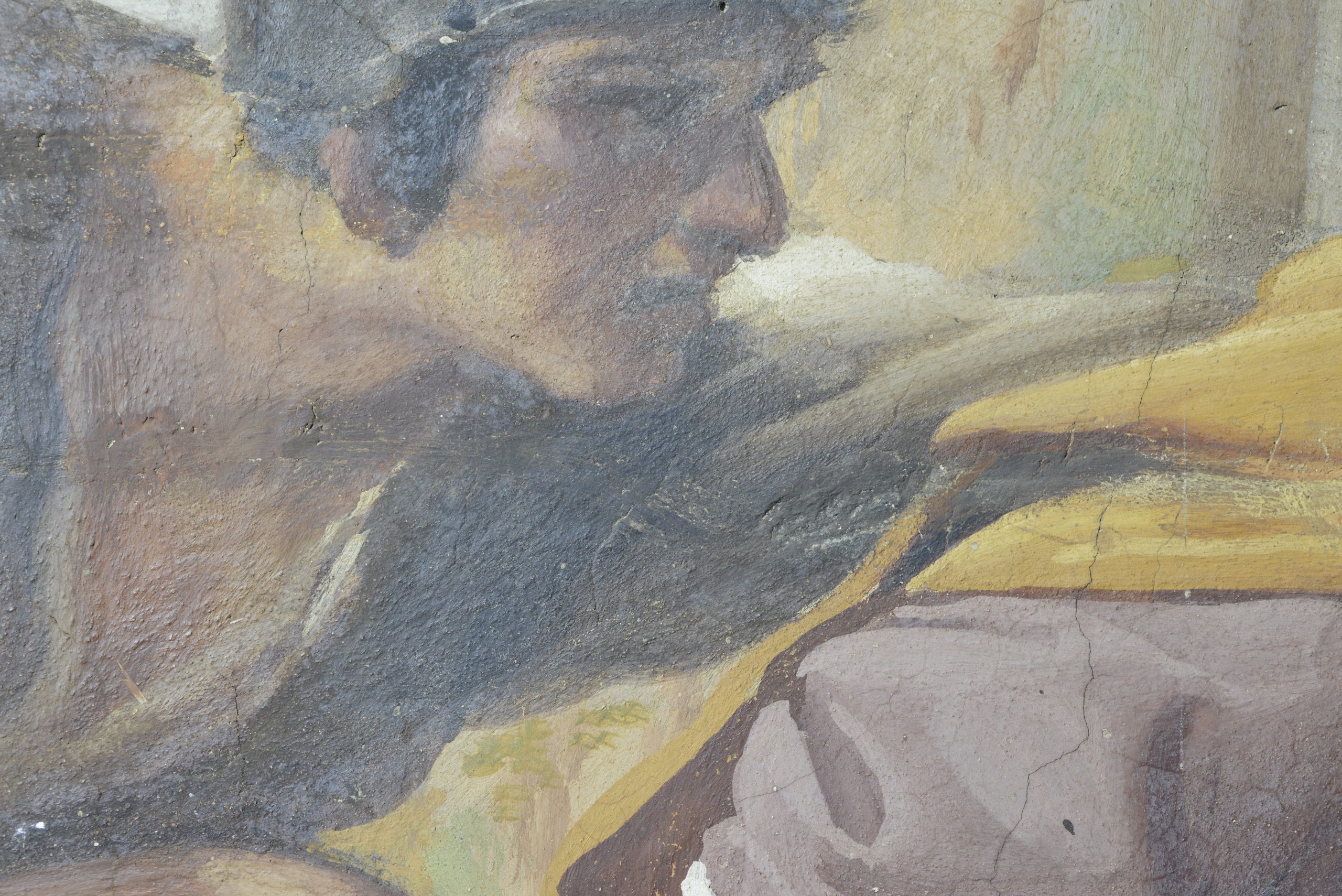
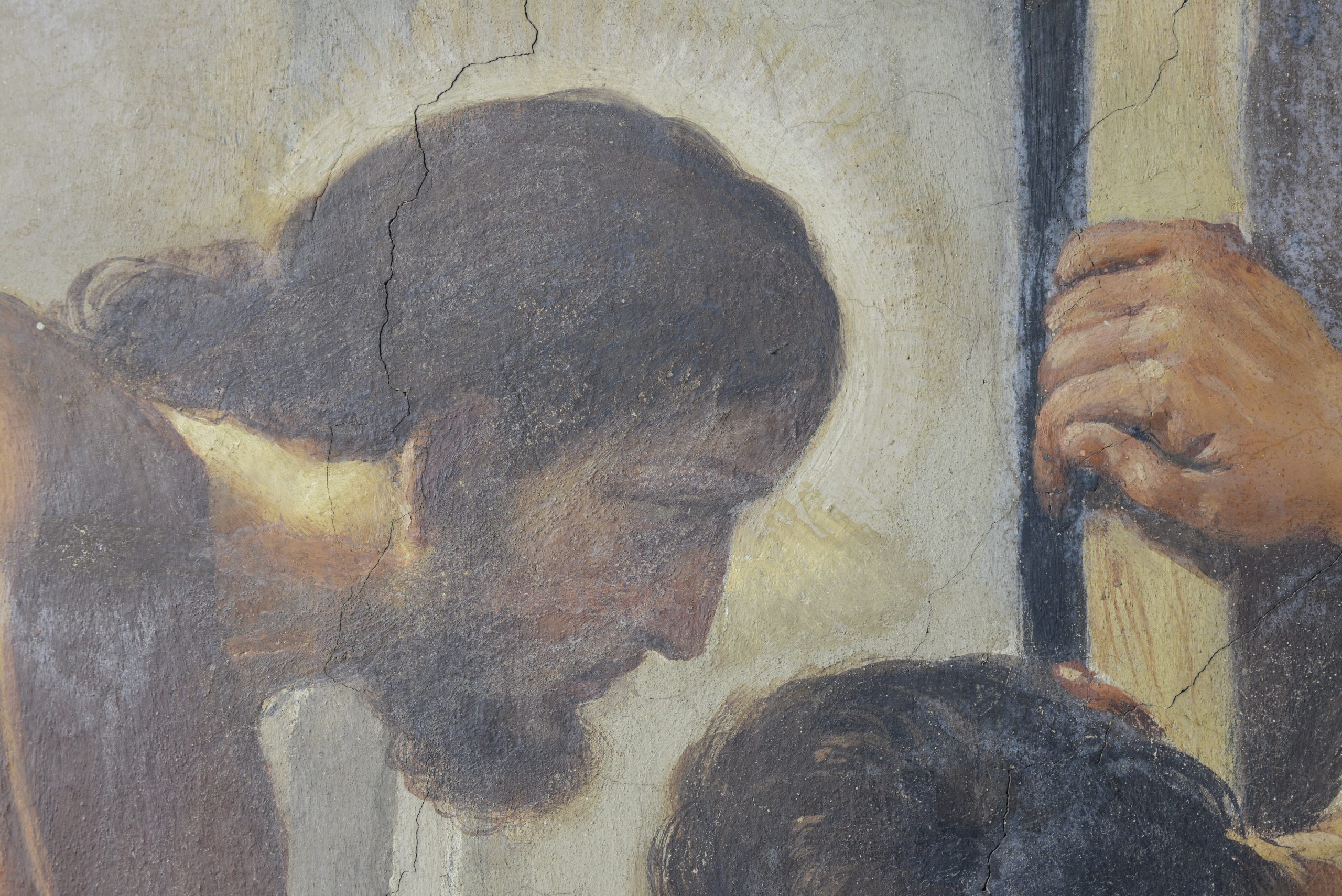
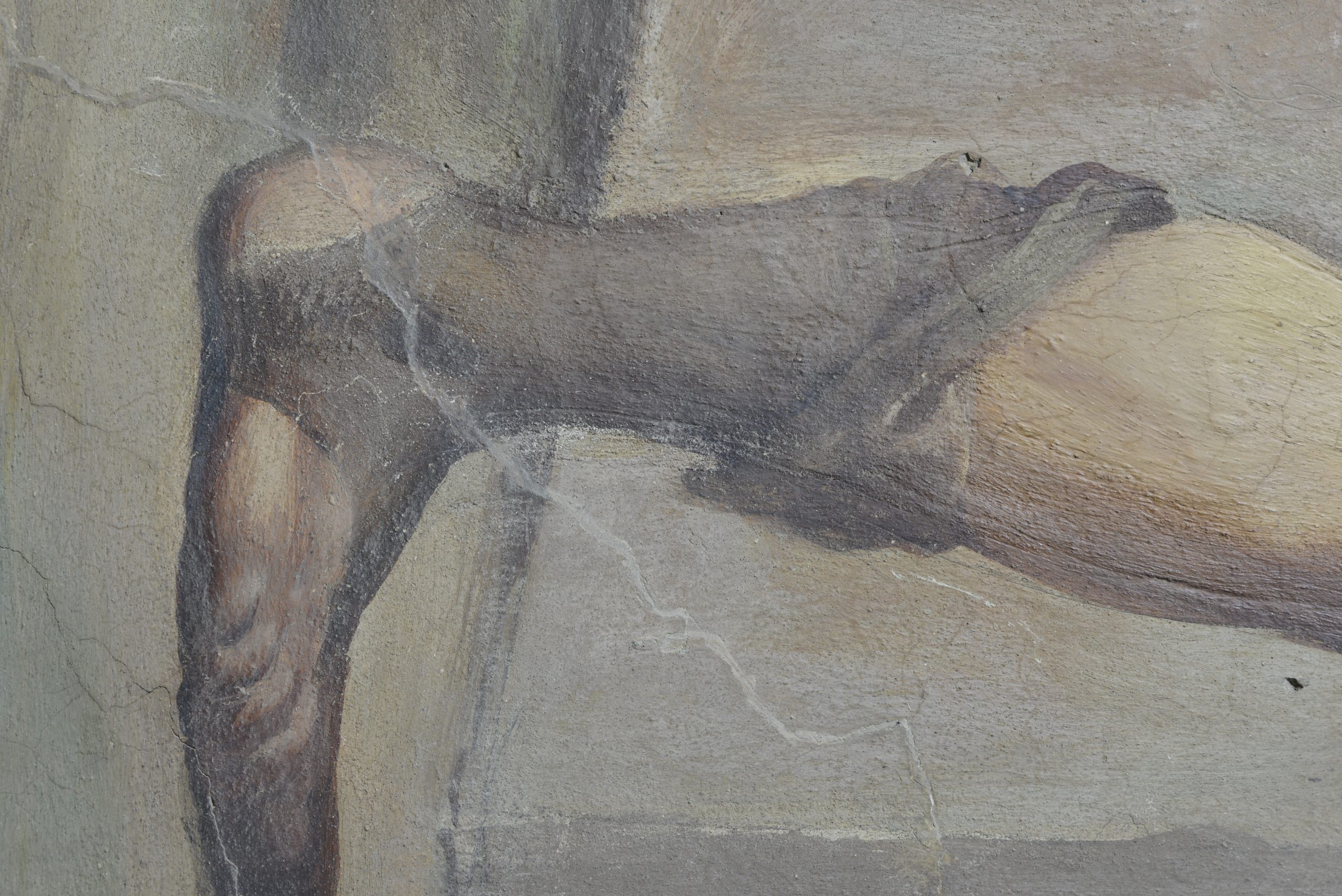
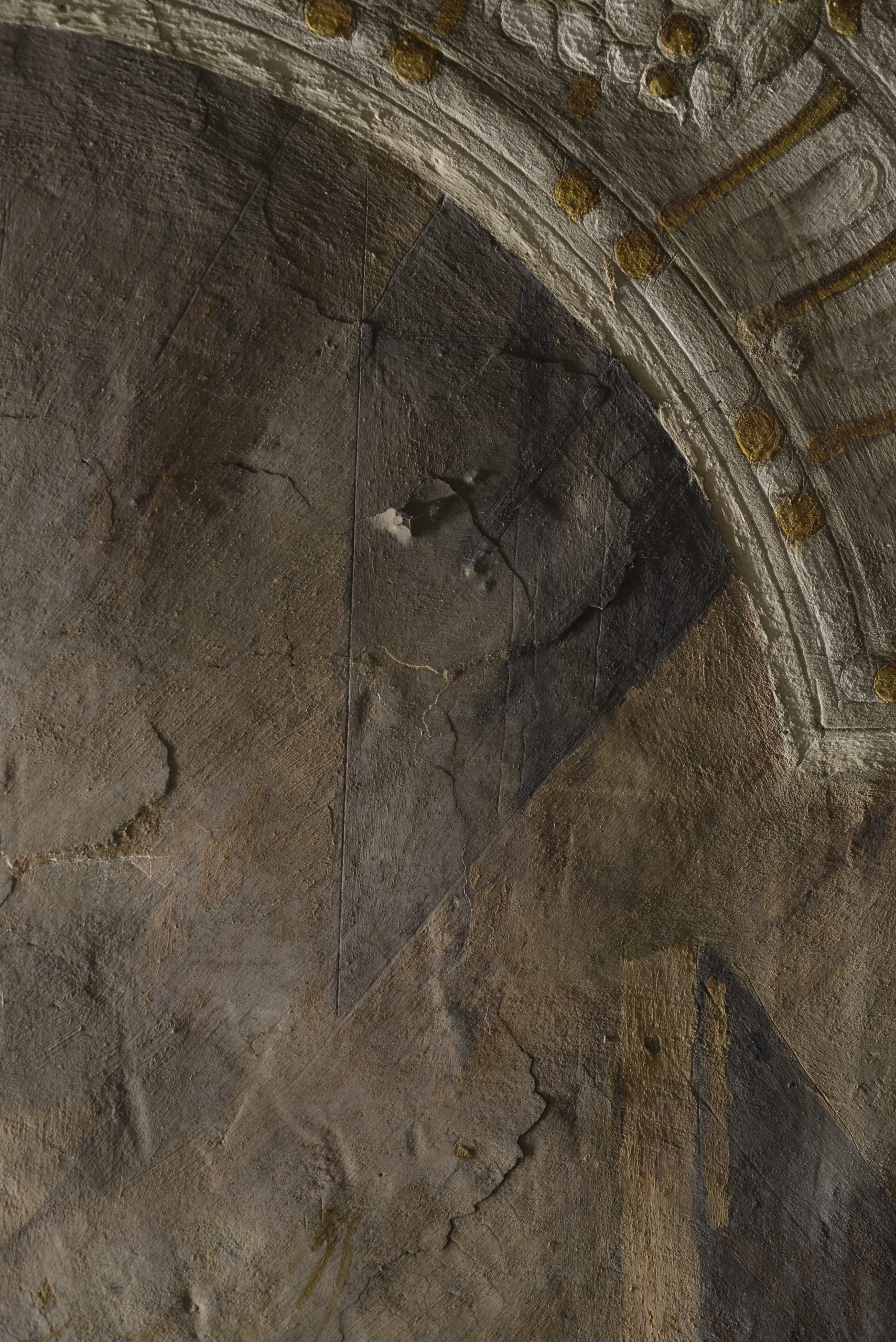
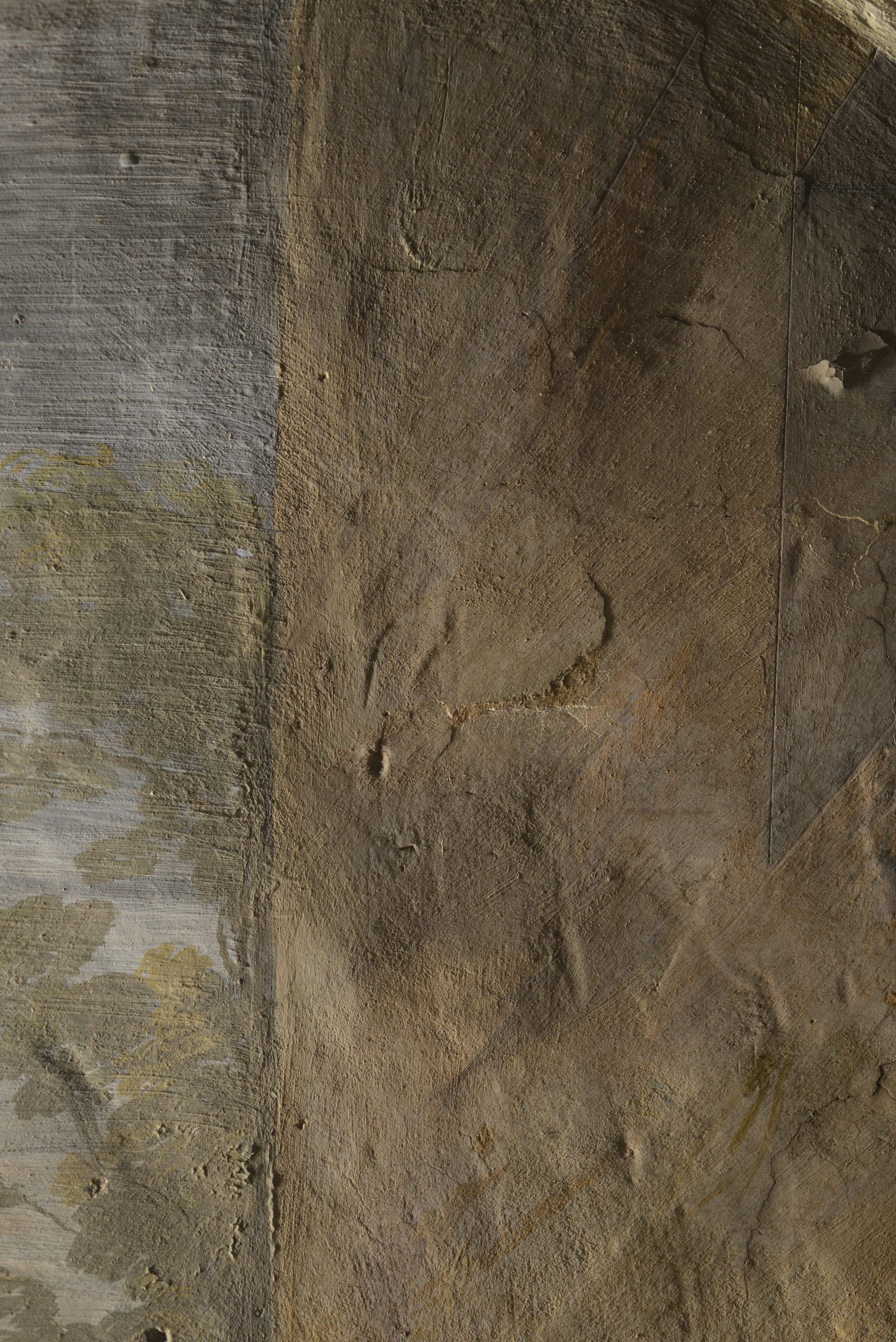
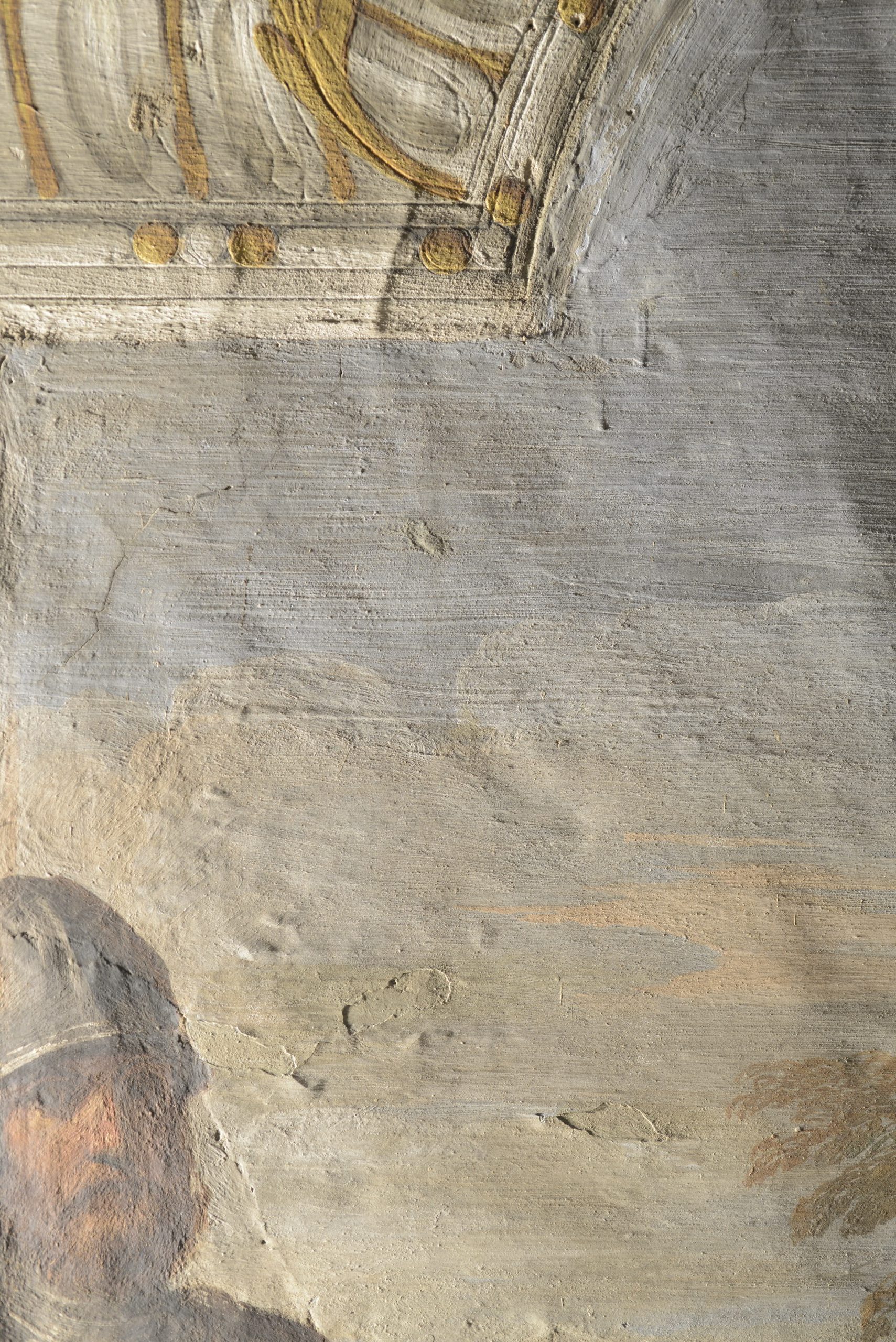
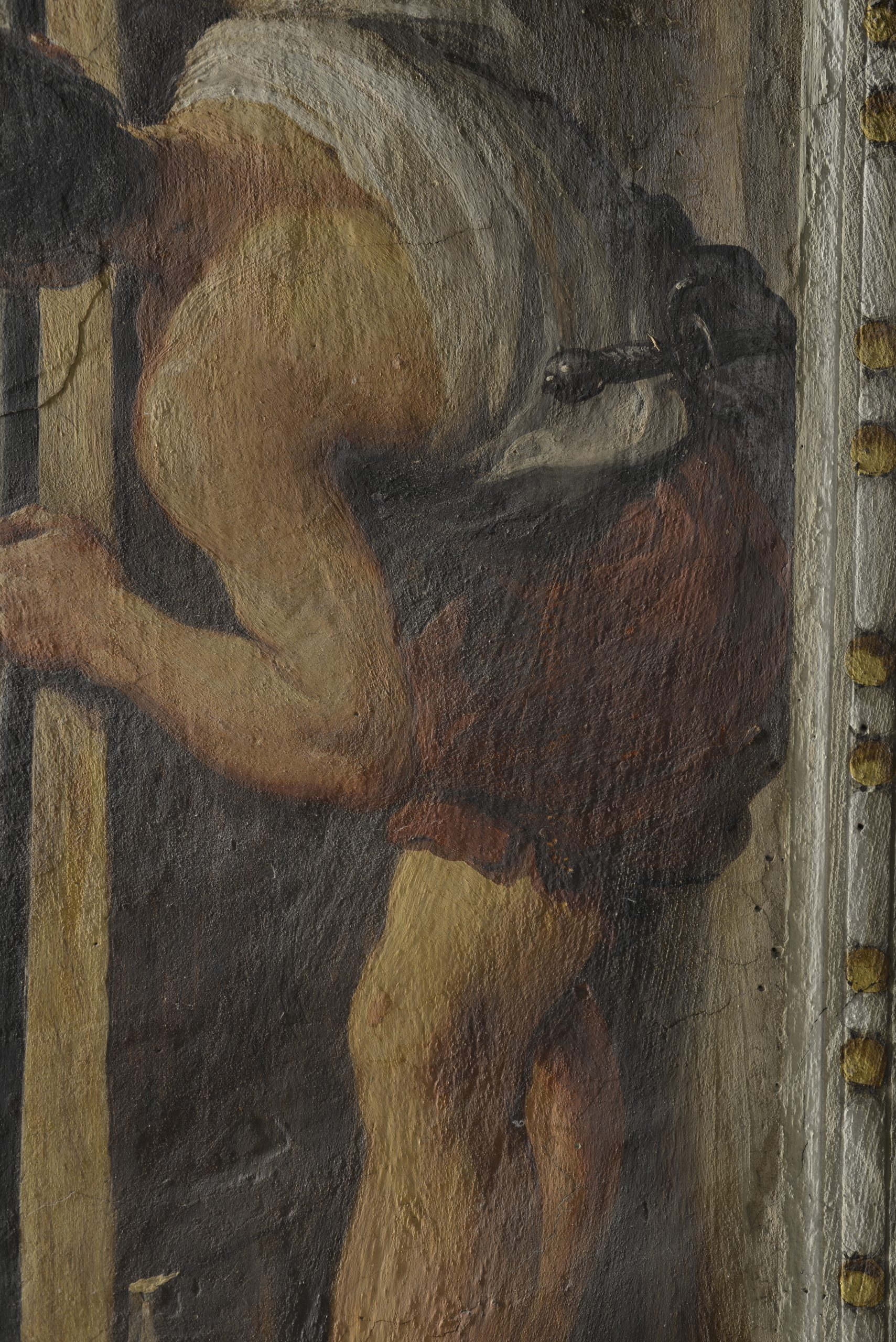
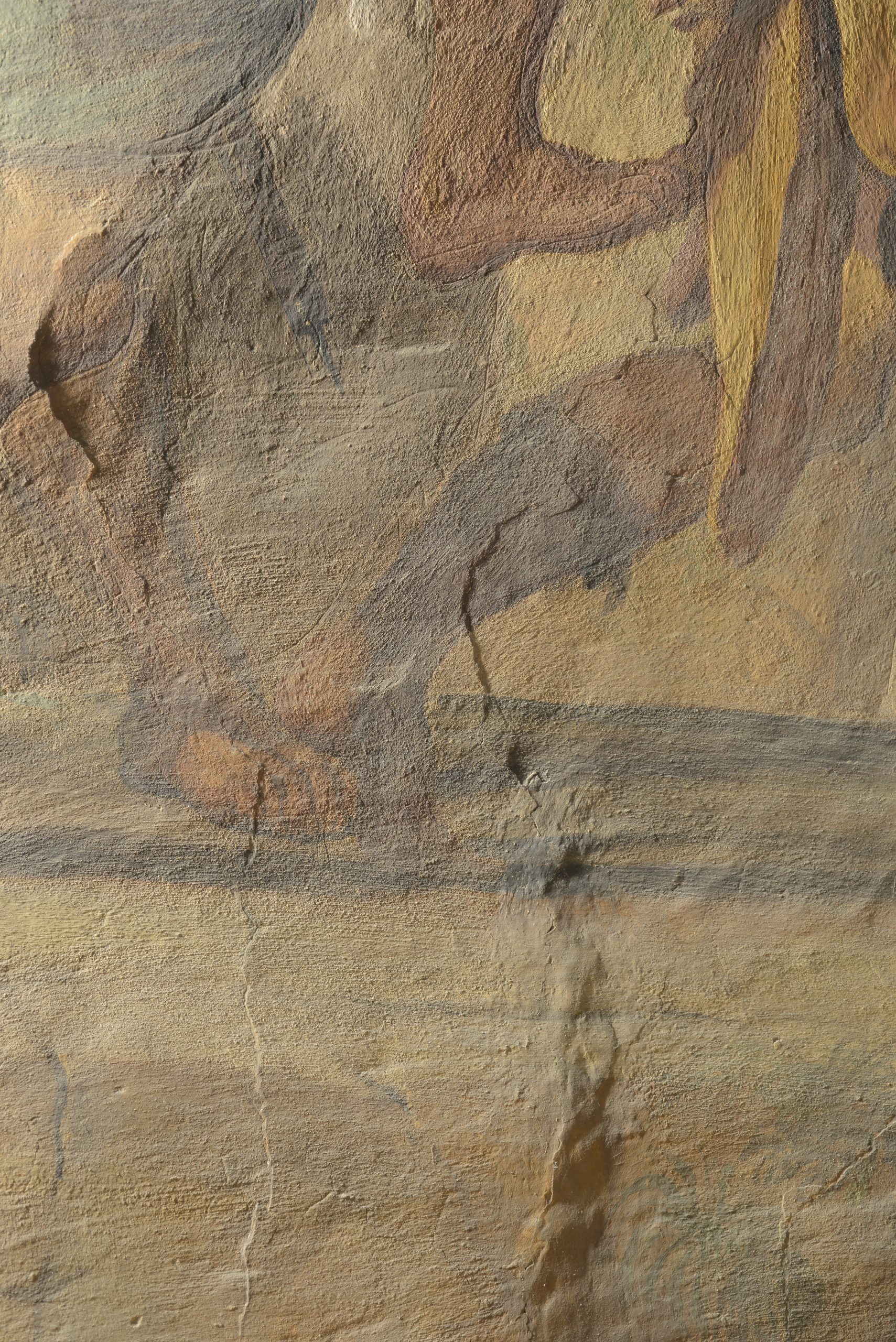
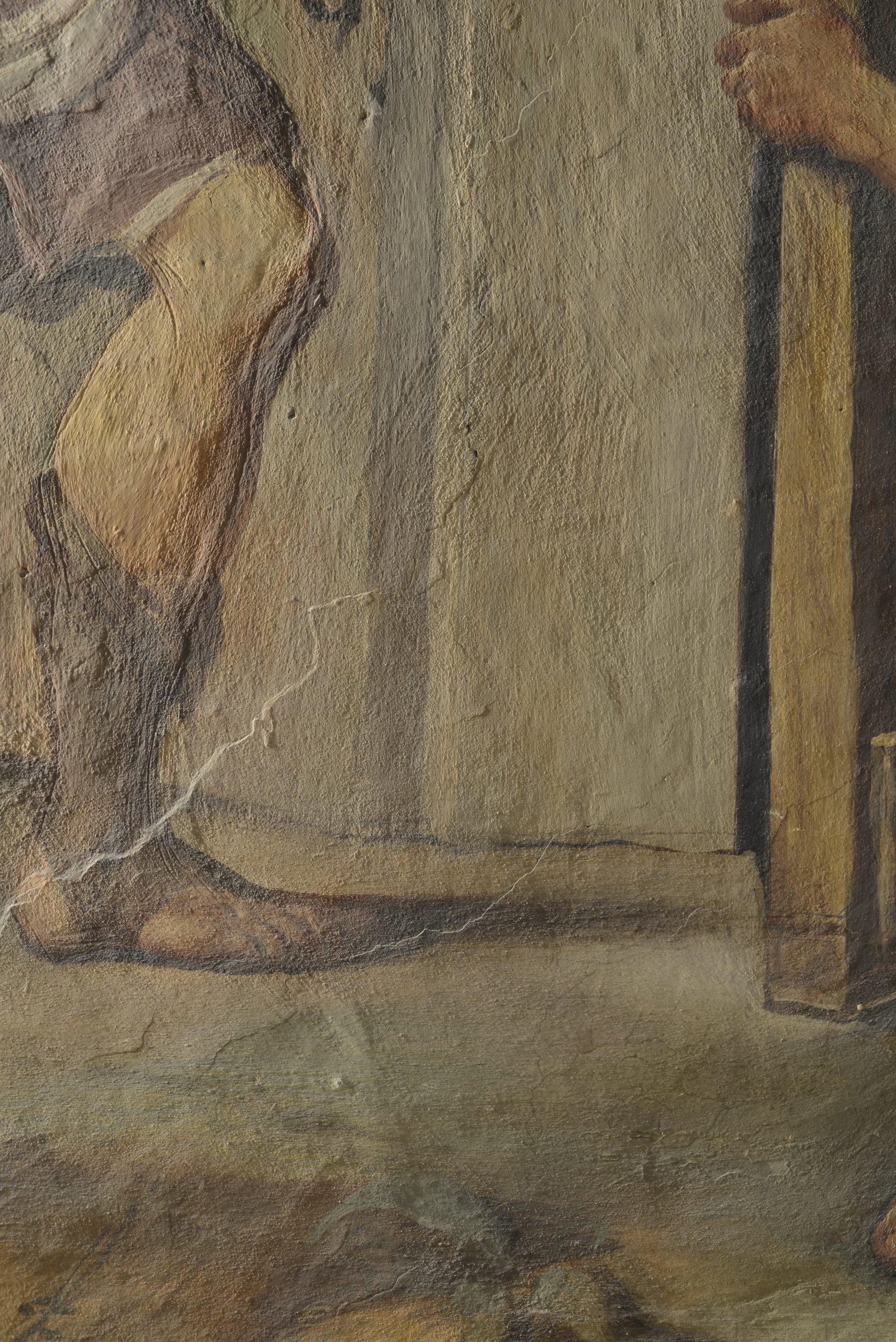
Observation in raking light made it easy the mapping of areas of bulging and depression of the plaster, detached from the masonry due to significant stormwater infiltrations. Widespread fractures and cracks of varying extent have been identified across the entire surface, as well as groutings attributable to previous restoration work.
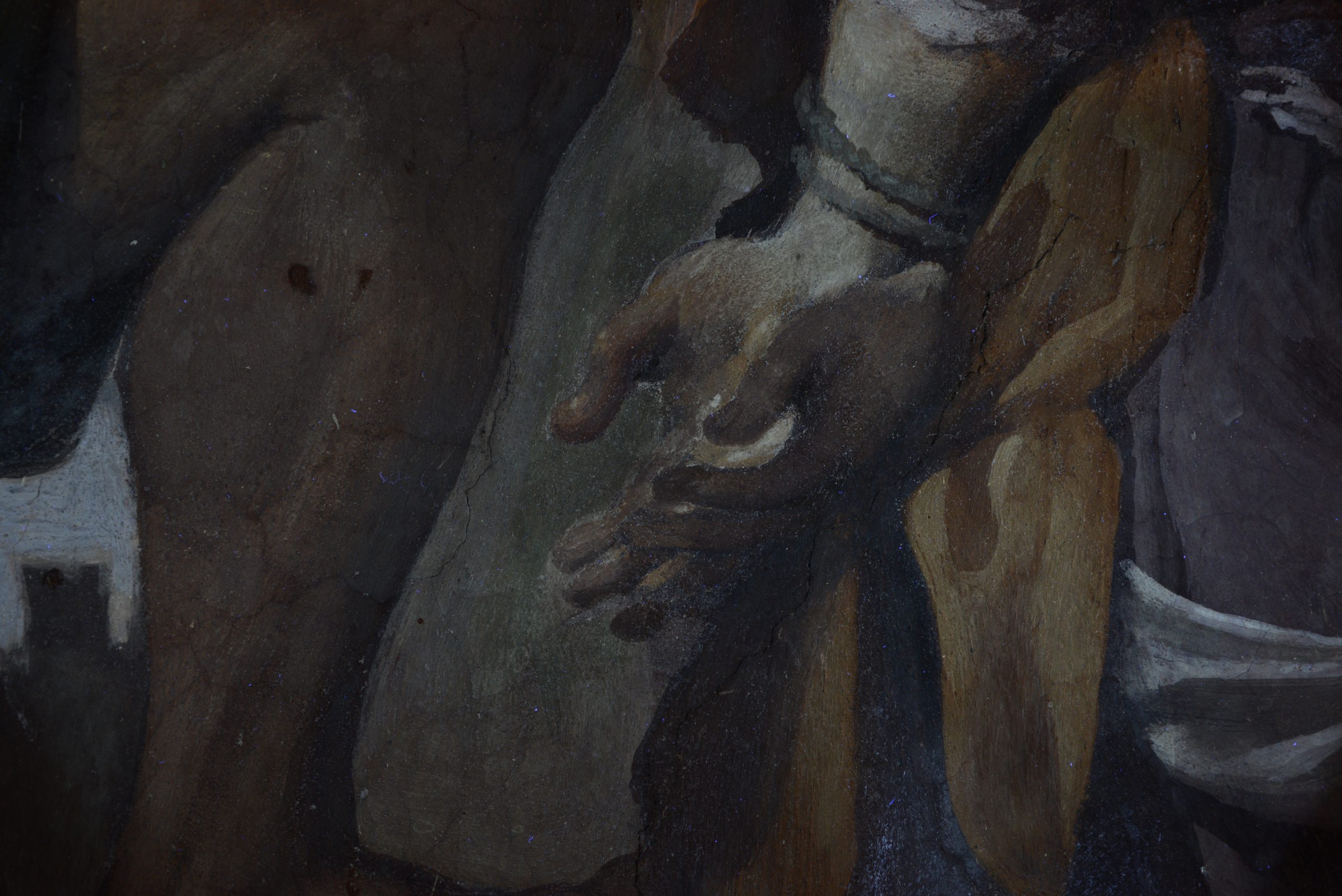
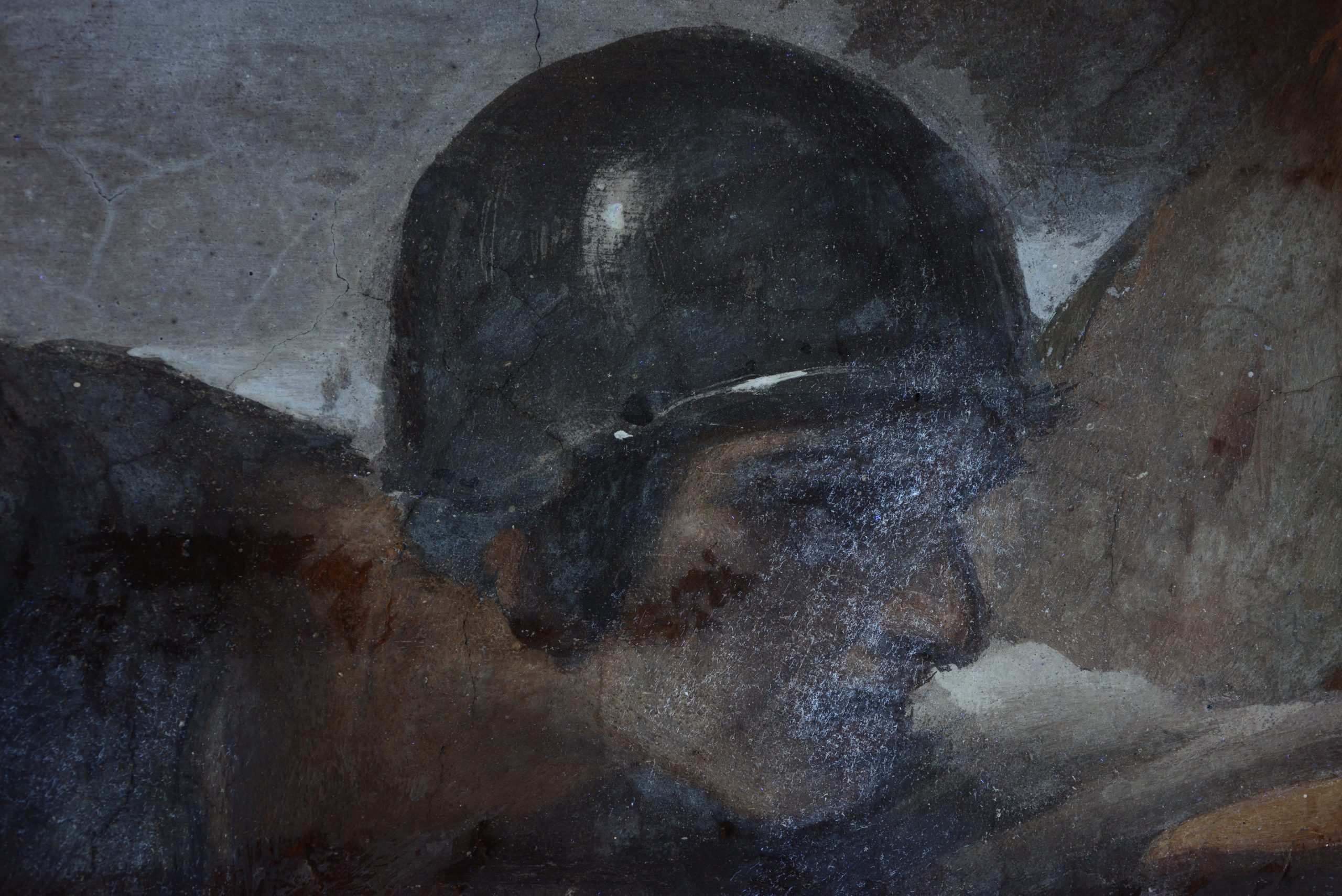
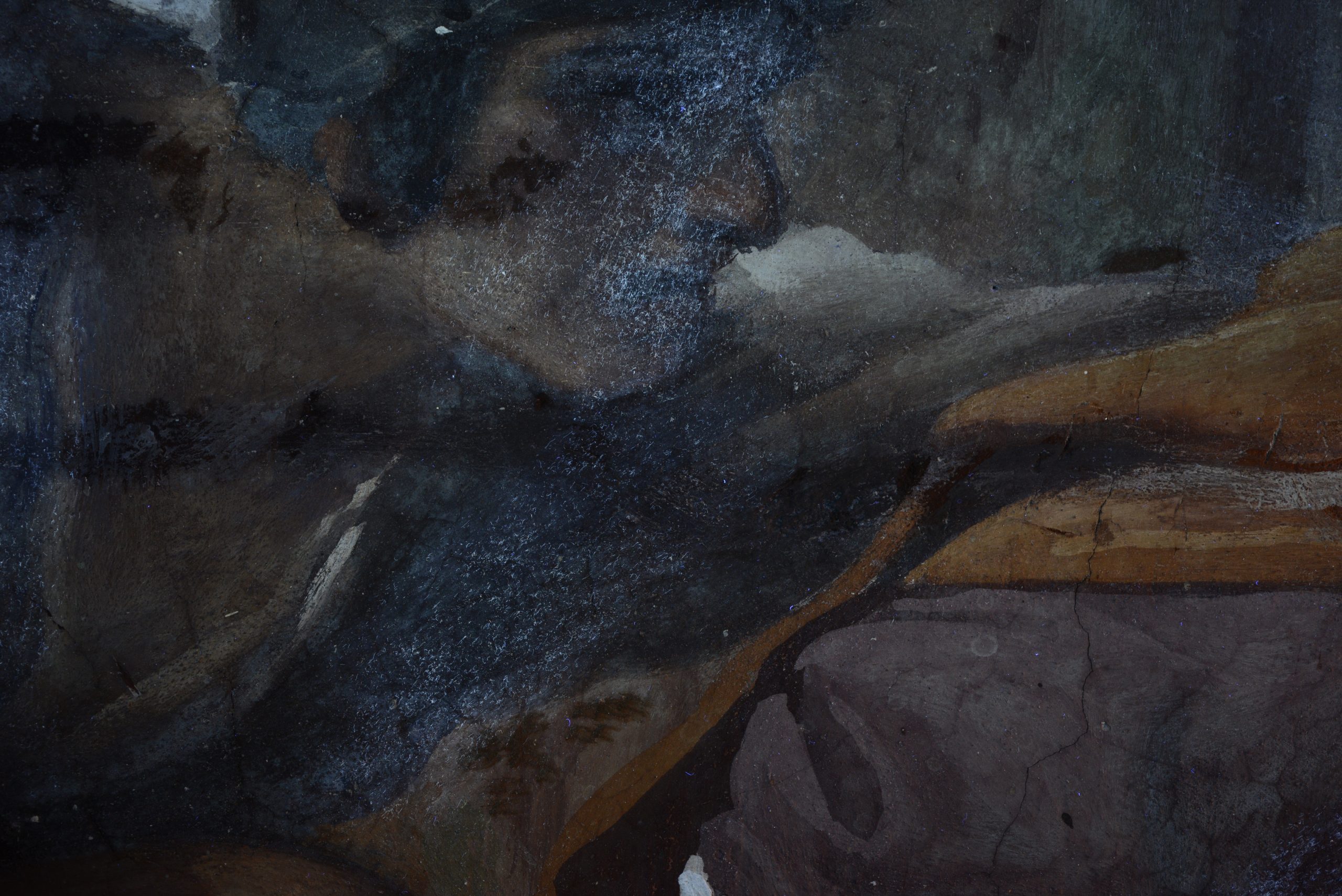
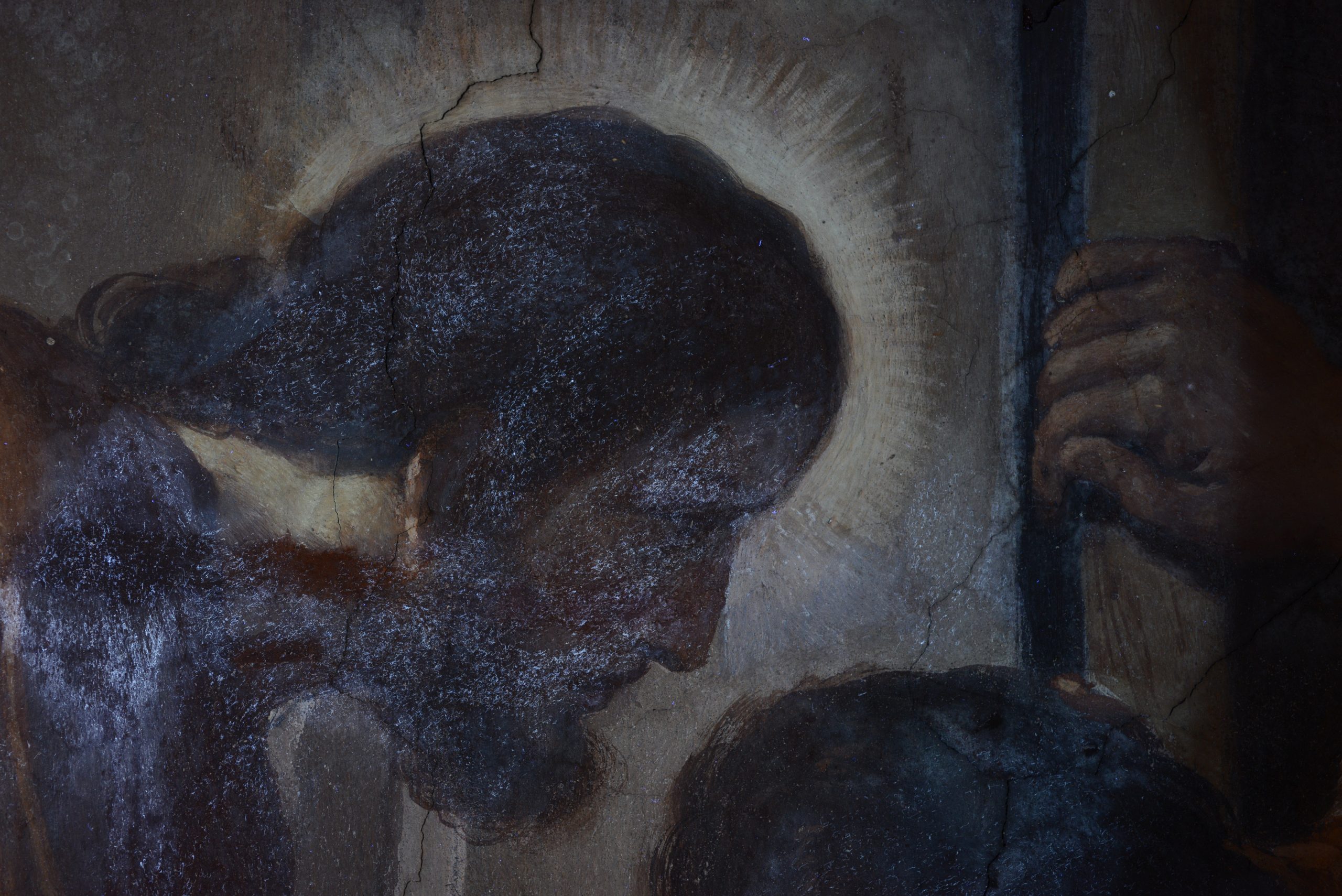
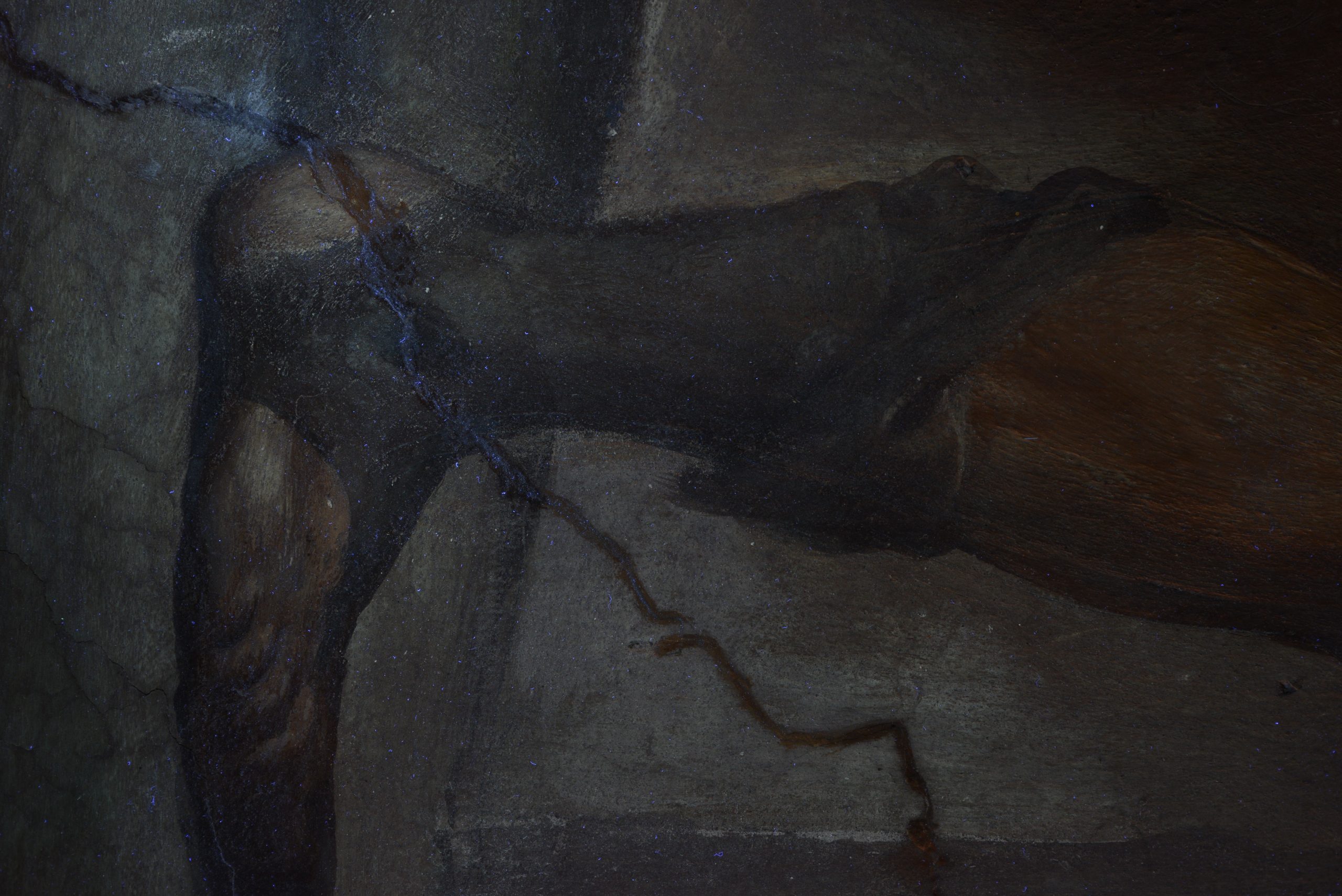
UV light imaging has highlighted the presence of a film that markedly dulls the background. The petroleum green fluorescence may be due to the uneven application of an acrylic resin-based fixative whose composition was later confirmed by microchemical analysis. It is hypothesized to be Paraloid, as documented in records related to restorations in the 1990s.