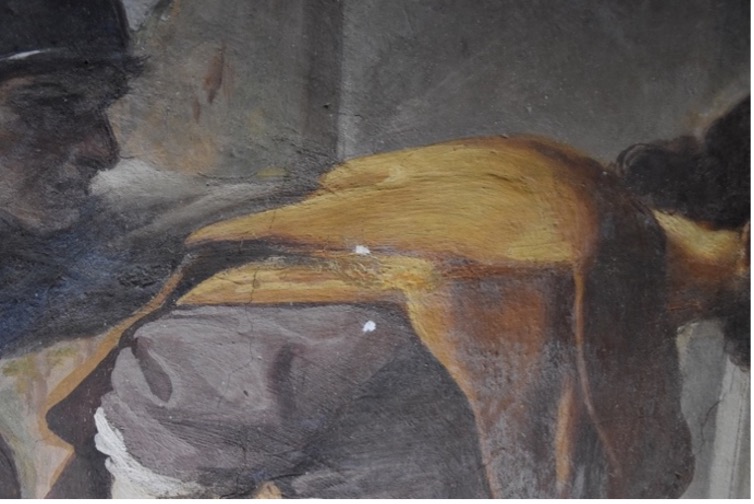
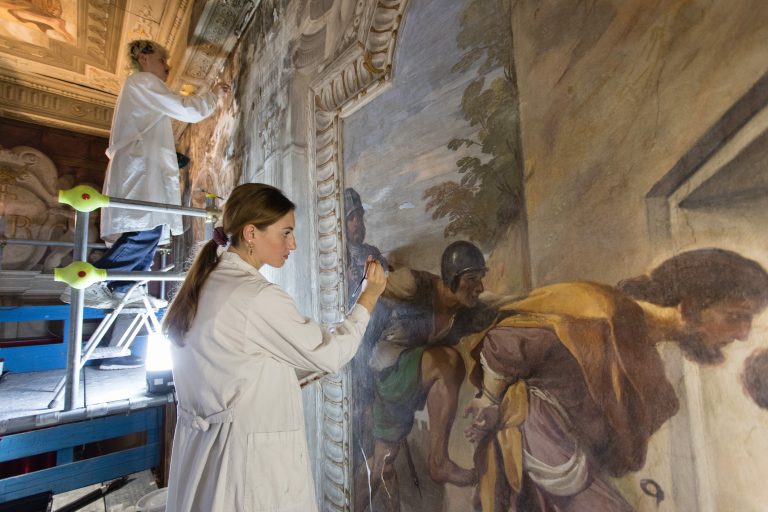
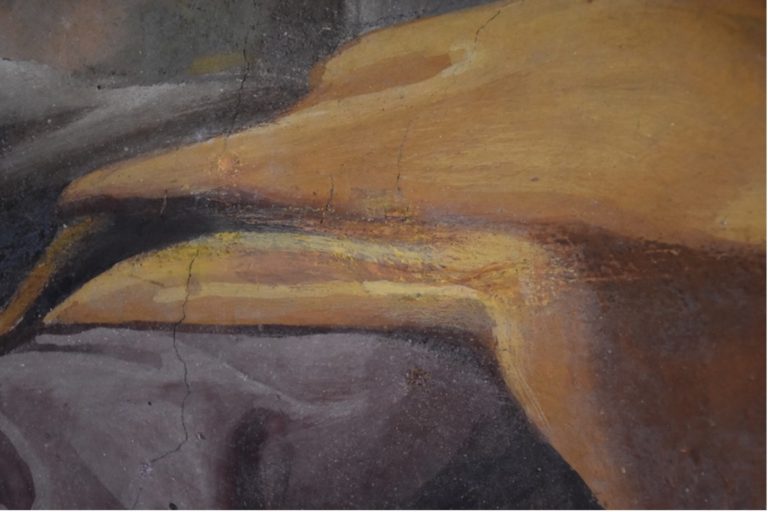
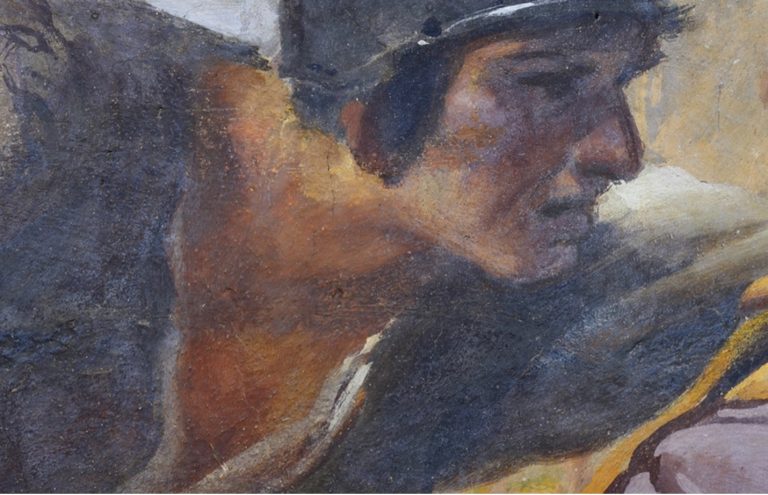
The first phase of the restoration involved removing the surface deposit layered over time on the painting. Dry cleaning using Wishab sponges was carried out, following the direction of the brushstroke corpus. The result was satisfying and allowed a clearer reading of the colors and composition.
PHASE II
Consolidation of the Plaster
The consolidation phase, along with the roof renovation of the oratory, was crucial in restoring the wall-plaster system. A series of holes were drilled with metal tools using already cracked areas of the plaster to adequately allow the consolidant to permeate. PLM-AL was chosen, a lightweight product particularly suitable for the restoration of wall plaster.
PHASE III
Consolidation of the Thin Plaster and Fixing of the Paint Film
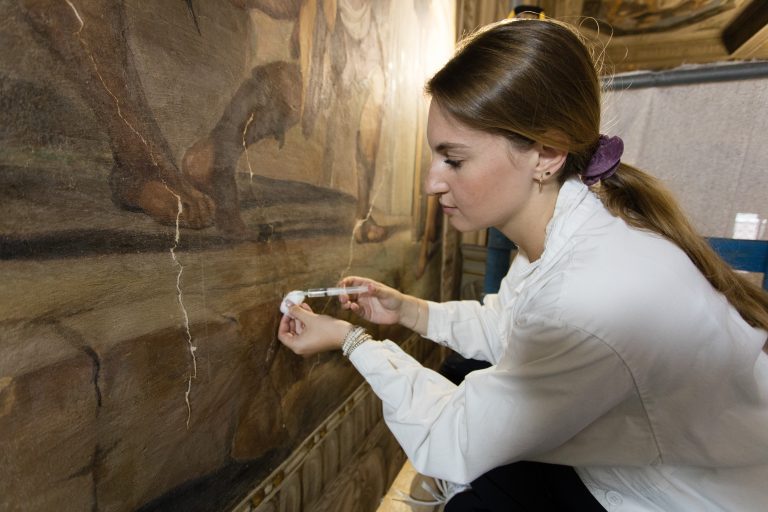
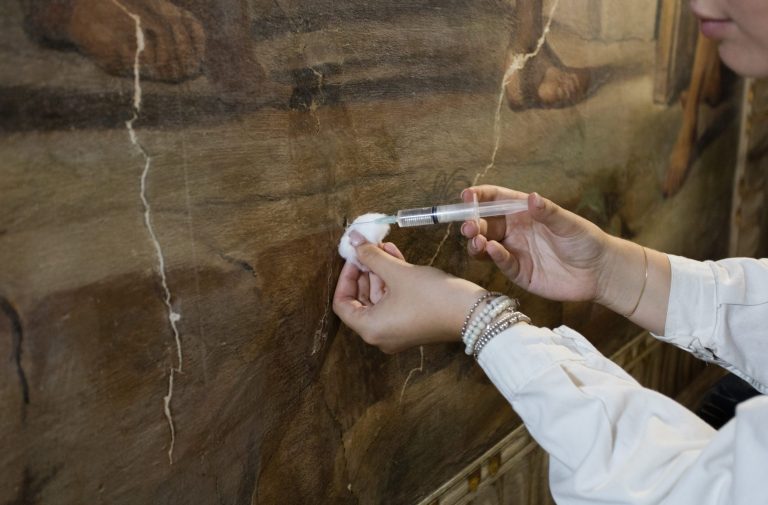
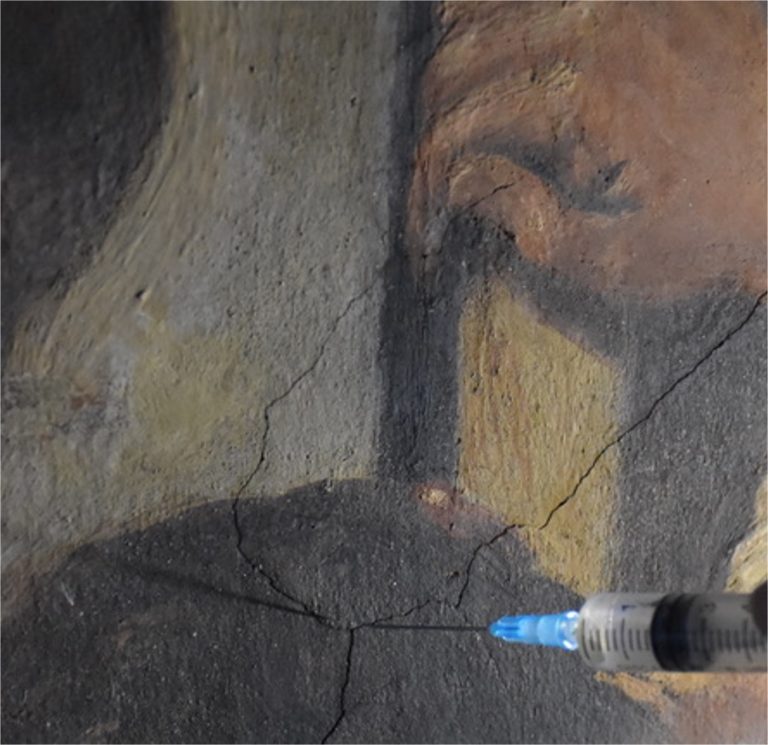
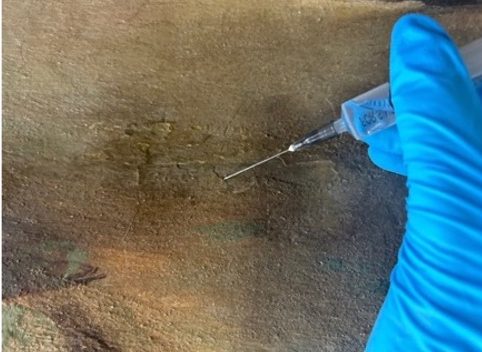
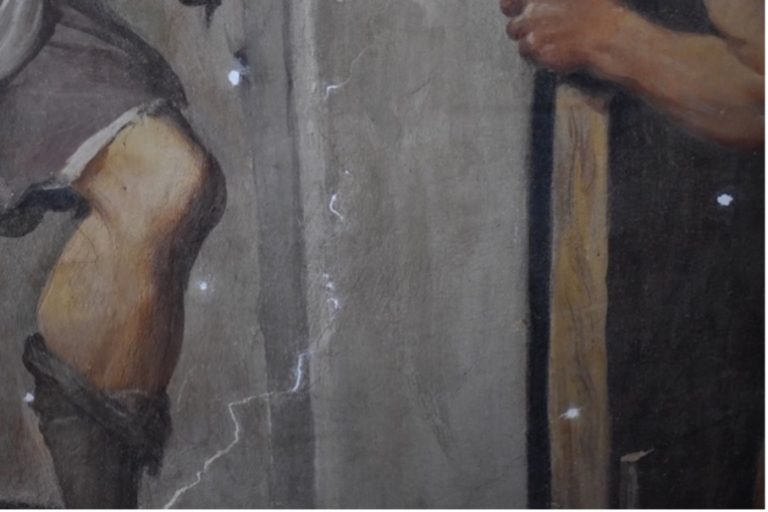
The consolidation continued with securing the plaster. Fractures deemed potentially harmful to the conservation status of the work were consolidated with injections of Primal B60 acrylic resin, through pre-existing holes in damaged areas. Areas of the paint film at risk of detachment were stabilized using funori algae dissolved in a watery solution.
PHASE IV
Removal of Previous Paint Integrations
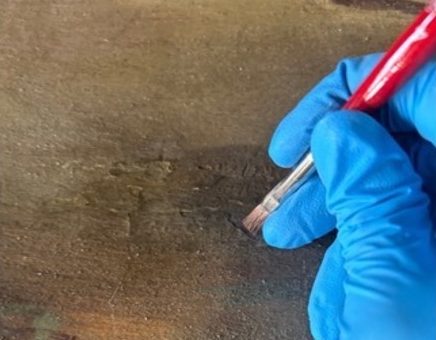
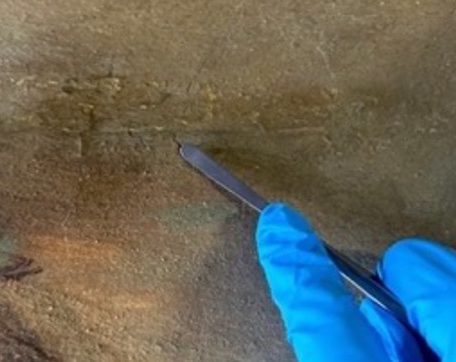
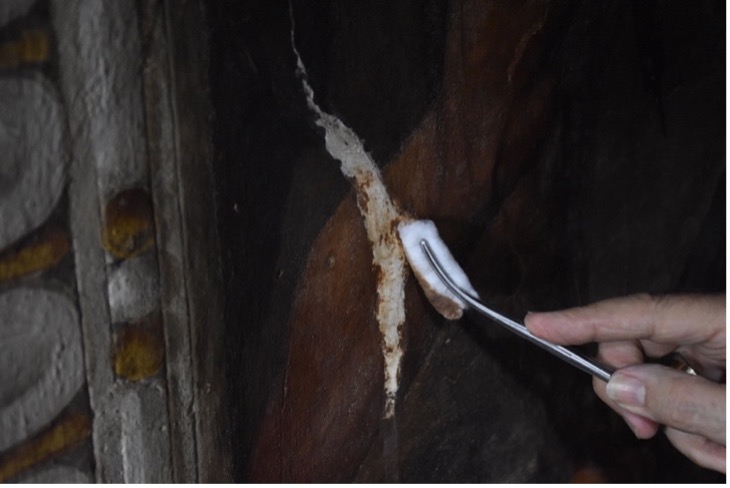
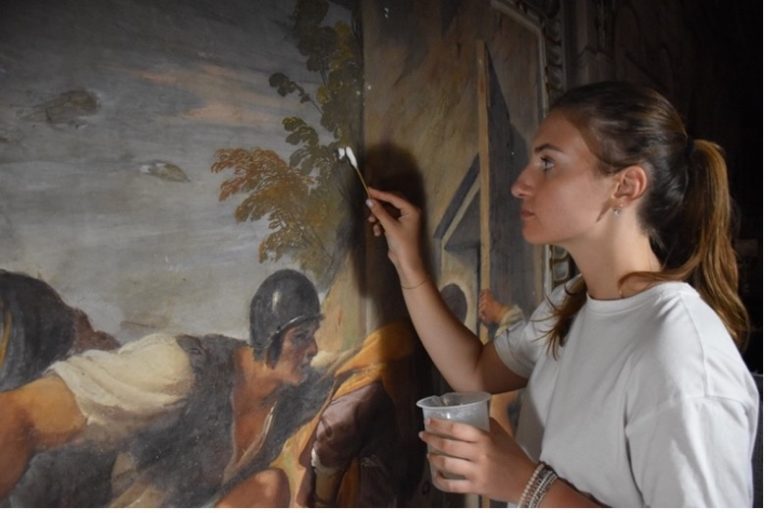
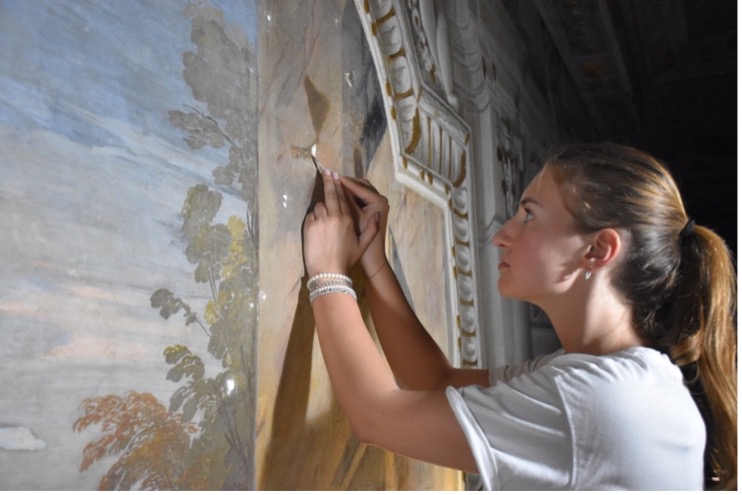
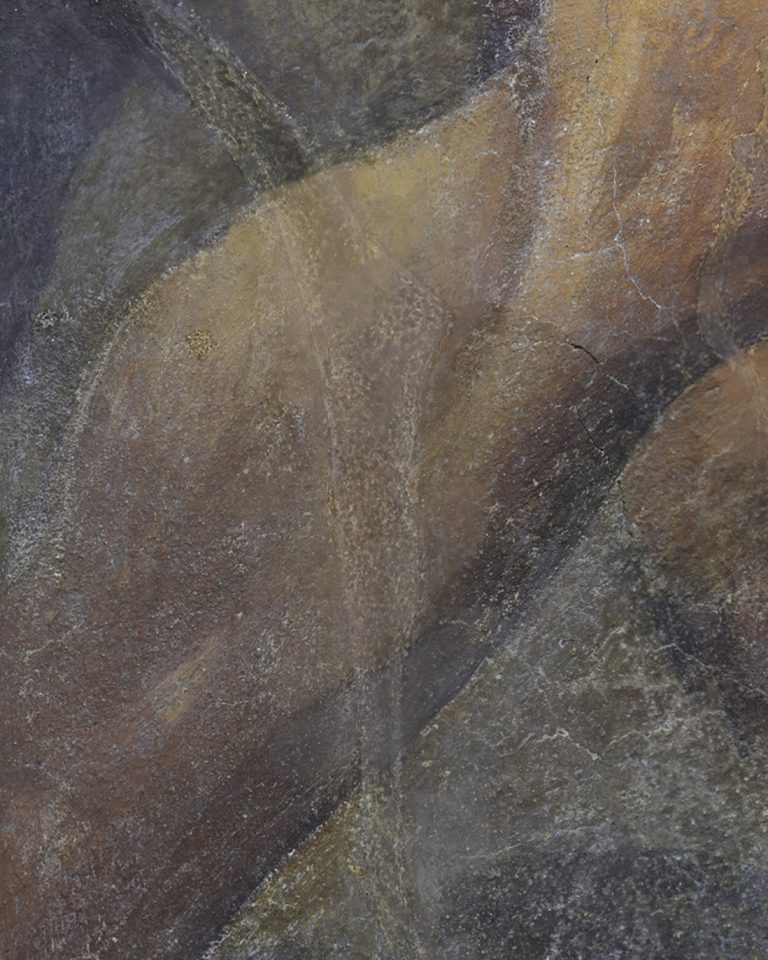
It was decided to remove the paint integrations considered aesthetically ineffective and hindering the reading of the image. Cleaning was carried out by cotton swabs with demineralized water and, where necessary, a weakly basic mixture of ammonium bicarbonate, tetrasodium EDTA, and water. In areas where the color was not moving, likely due to the presence of casein, the same weakly acidic pH mixture was applied. Some overly protruding retouches were removed with a scalpel to level the fills. Other lime additions, particularly cohesive because they were applied on areas of color detachment, i.e., directly on the frescoed plaster, were removed mechanically with a rounded-blade scalpel after being softened with the previously used basic pH mixture.
PHASE V
Cleaning the Acrylic Resin
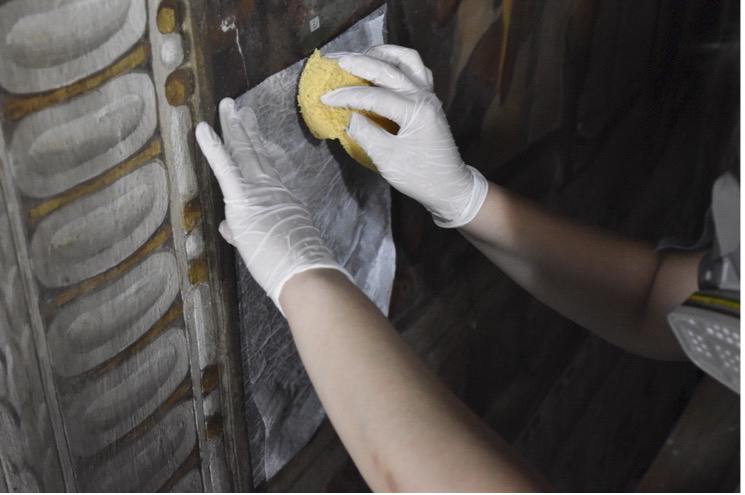
The goal of the cleaning was to reduce the thickness of the aged resin as much as possible, proceeding gradually in order to avoid the damaging of the paint film, Paraloid being strongly adhered to the pictorial layer.The patina caused various issues, including optical disturbances from the opalescence of the film, detachments due to the adhesive tension of the aged product, rapid dust accumulation, and occlusion of the plaster’s porosity. The area to be treated was humidified; then, a double layer of Japanese paper was applied with a solvent mixture selected on preliminary tests. After removing the poultice, the area was rubbed with a pad soaked in the same mixture to promote the removal of the swollen resin.
PHASE VI
Groutings
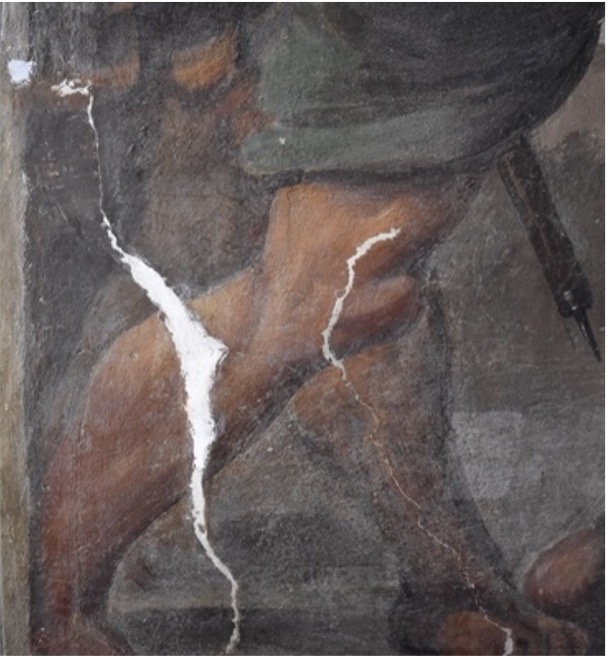
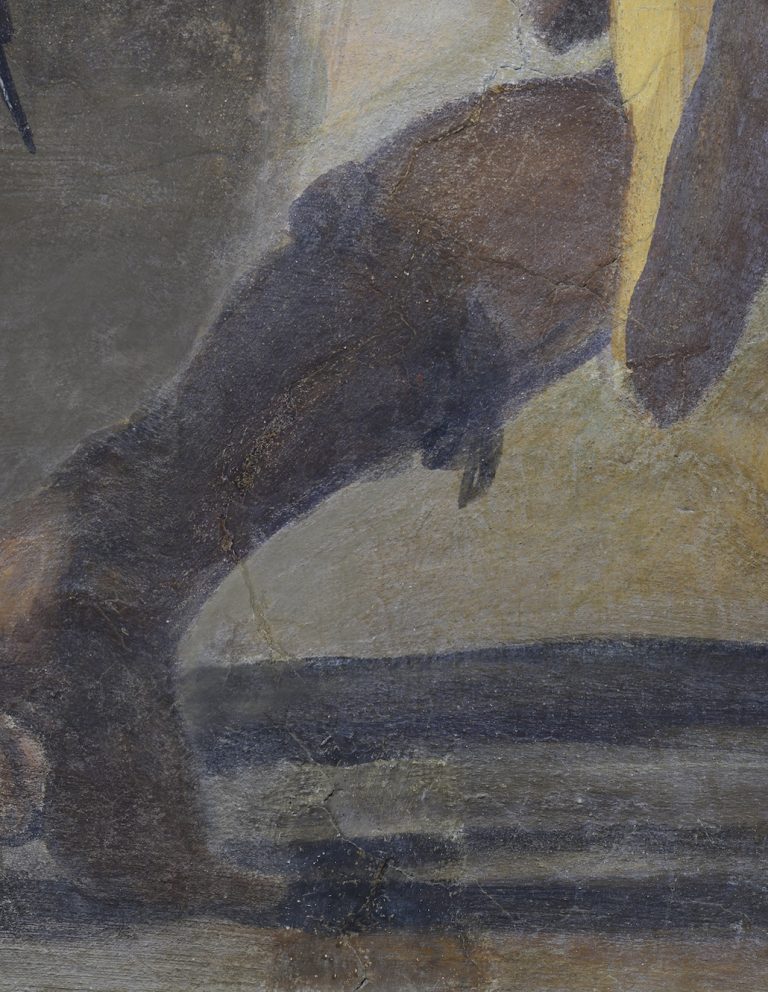
Various types of groutings were carried out: those for the consolidation holes, areas of plaster detachment and lesions potentially harmful to the deterioration of the work. These operations were performed using polyfilla, a natural formulation based on gypsum and cellulose compatible with the substrate. When dry, the edges of the grouts were carefully cleaned with cotton swabs and demineralized water, then leveled with a scalpel. After waterproofing with then leveled with a scalpel. After waterproofing with Acryl-Em33 in a 2% watery solution, the grouts served as a base for subsequent paint integrations.
PHASE VII
Retouching
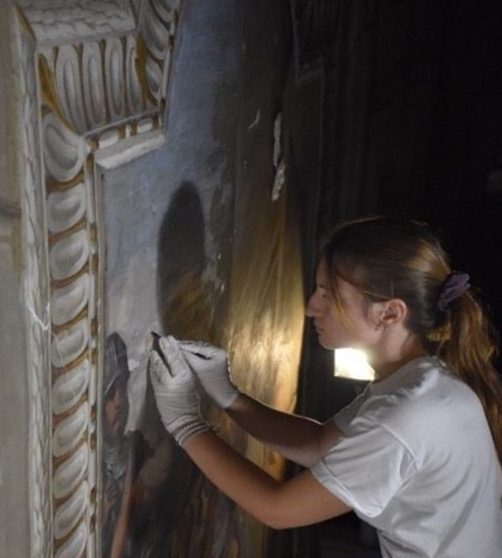
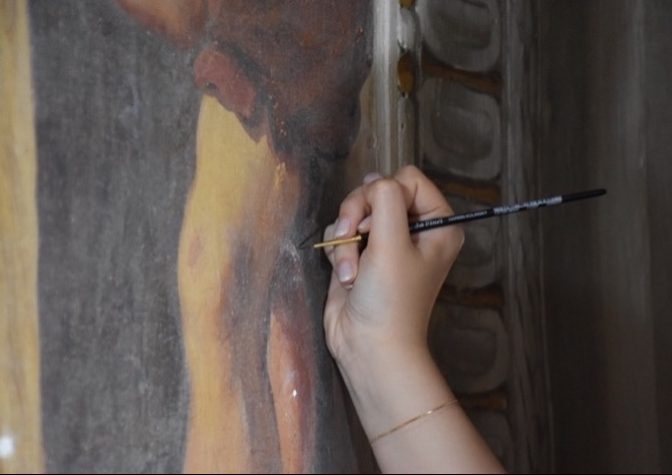
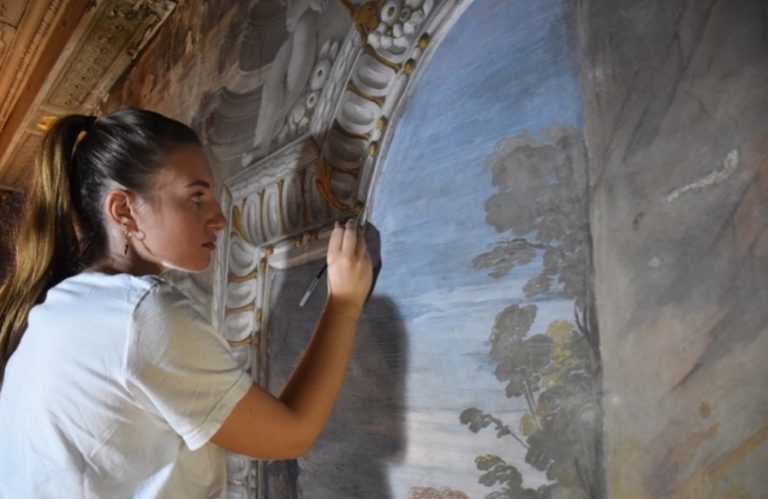
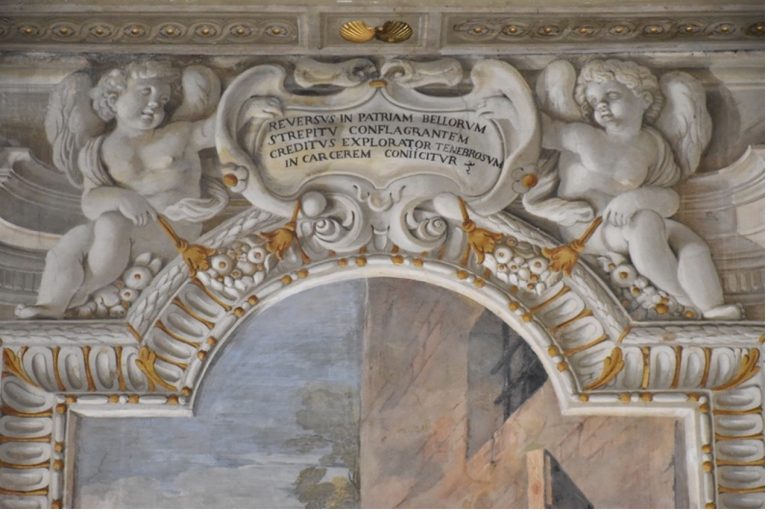
It was decided to integrate almost exclusively with watercolors mixed with ox gall, an anionic surfactant that allows the color to be spread more fluidly on the waterproofed surface, avoiding localized absorption and accumulations of color. In order to make the intervention recognizable and compatible with the vibrant texture of the fresco, a dotted integration was chosen. The casein retouches, which were chosen to be retained as historic, were tonally leveled with oil pastels. The saturation of the film, scratched and abraded in many places, was restored by glazing the numerous small gaps and finally the areas of the frame with gaps and the areas of detachment of the plaster were reconstructed with a base of pigmented slaked lime, then veiled with watercolor.